How it works
Bioidentical means it has the exact same structure as the testosterone your body makes. Testosterone attaches to androgen receptors all over the body. In the tissues, some of it turns into dihydrotestosterone (DHT), through an enzyme called 5α-reductase. Some turns into estradiol, through an enzyme called aromatase. Replacement brings back normal testosterone signals, and the estrogen signals that come from them.
The evidence
The Testosterone Trials (TTrials) studied men over 65 with low T. Treatment improved sexual function, mood, walking distance, and anemia (low red blood cells). Current Endocrine Society guidelines support TRT for men who have symptoms and whose morning total T is low (<300 ng/dL) on repeat tests.
Typical dosing
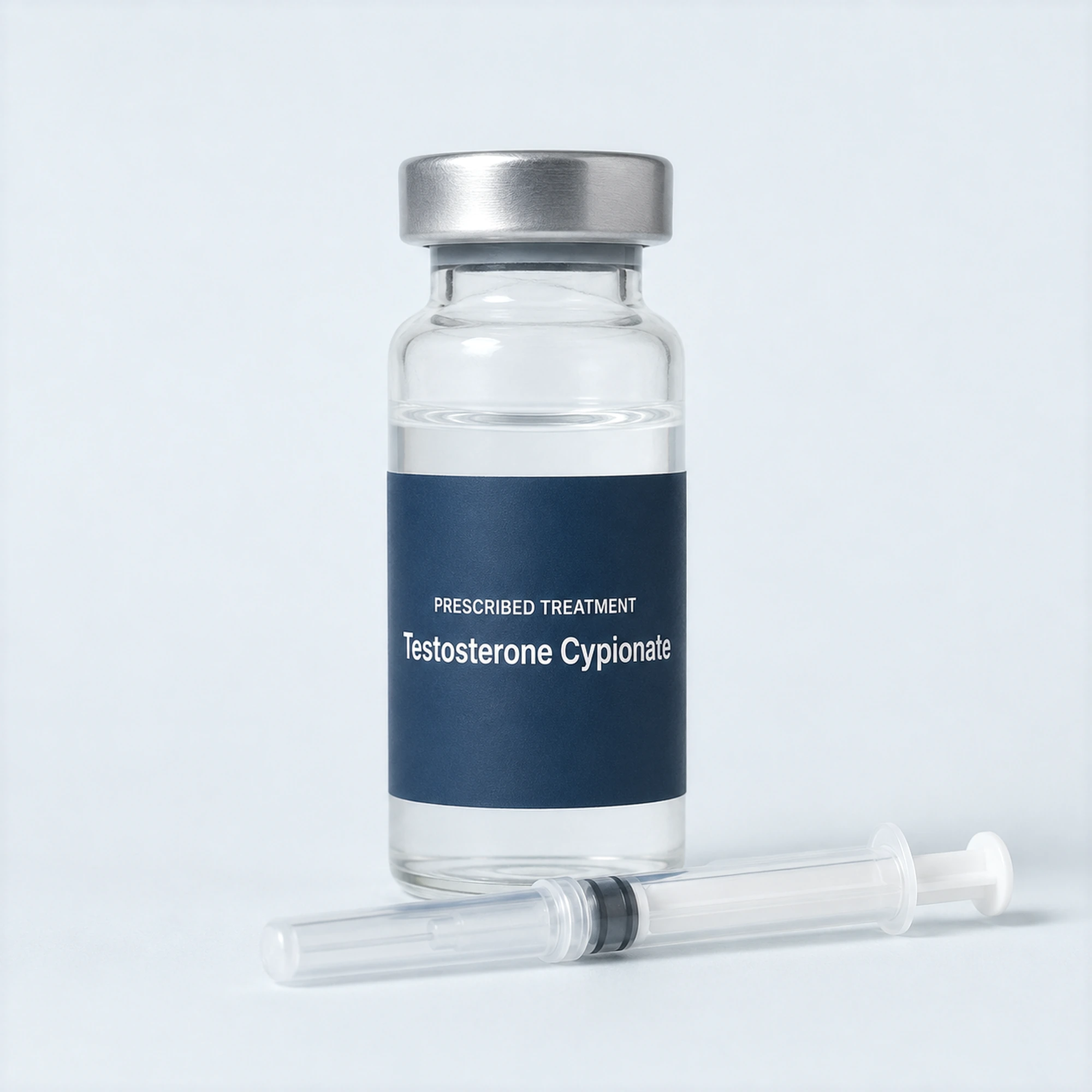
A common plan is testosterone cypionate, 100–200 mg a week, as a shot into the muscle or under the skin. The weekly amount is often split into two doses. HCG 250–500 IU twice a week may be added when fertility matters. It doesn't guarantee fertility.
Side effects
Common
- Acne
- More red blood cells (higher hematocrit)
- Mild water retention
Less common
- Higher estradiol
- Worse sleep apnea
Rare
- Too many red blood cells (polycythemia), needing blood to be drawn off
- Lower sperm production
Drug interactions
- Blood thinners: higher bleeding risk as hematocrit rises
- Aromatase inhibitors (such as anastrozole): sometimes considered when estradiol runs high. Your clinician decides.
- Insulin: the dose may need to change as your body composition changes