How it works
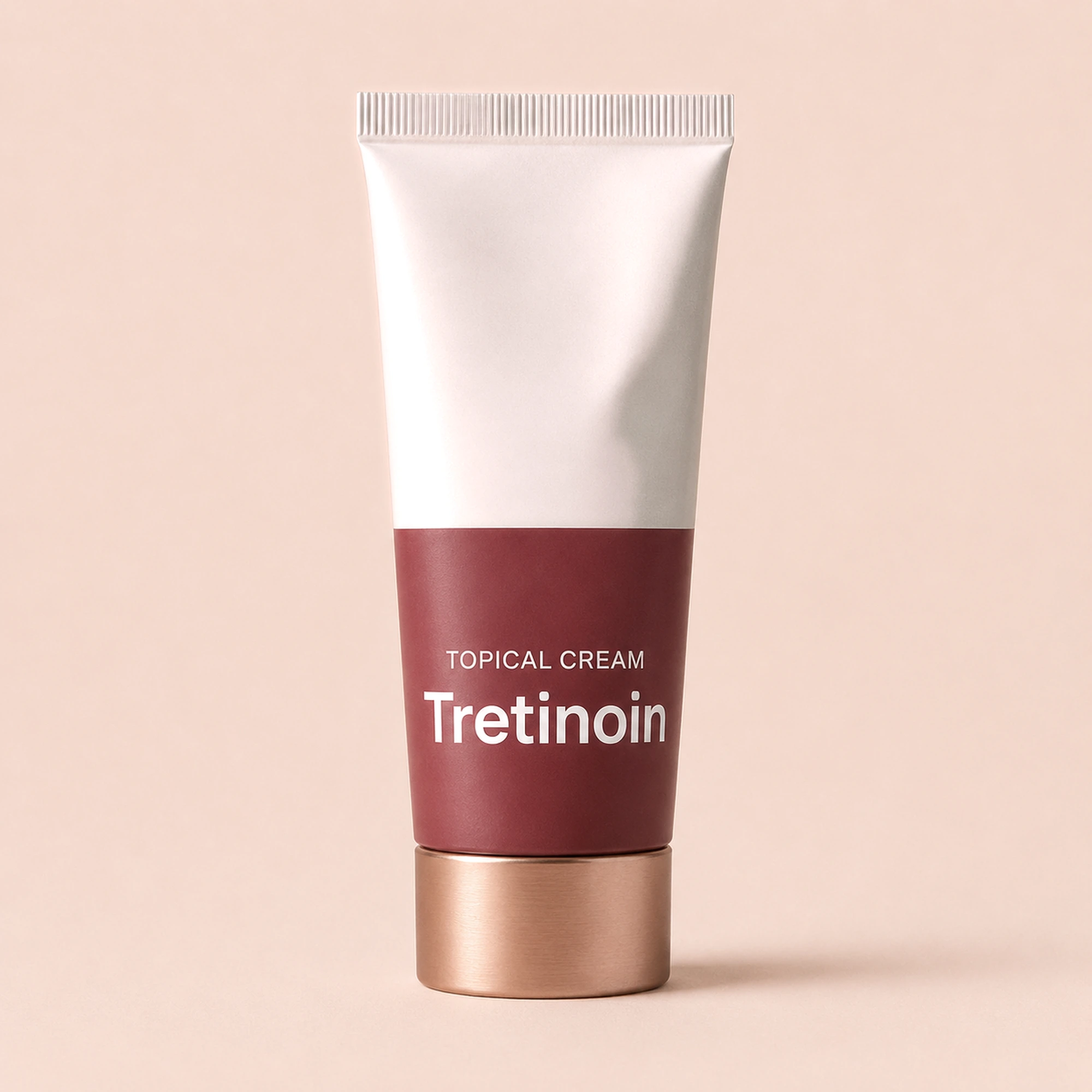
Tretinoin attaches to retinoic acid receptors (RAR-α, β, γ) in skin cells. It brings skin cell turnover back to normal and means fewer clogged pores. It also helps your skin make more collagen.
The evidence
FDA-approved since 1971. Decades of trials show it works for acne and sun damage at strengths of 0.025–0.1%. Pharmacies often compound it with niacinamide or azelaic acid to make it gentler on the skin.
Typical dosing
Put a pea-sized amount on clean, dry skin at night. Use it 3–7 nights a week, depending on how your skin handles it. For sensitive skin, start with a lower strength (0.025%). Daily sunscreen is a must.
Side effects
Common
- Dryness
- Peeling
- Breakouts at first (purging)
- Sun sensitivity
Less common
- Dark spots on darker skin if overused
Drug interactions
- Other exfoliants (AHA/BHA): combine with care
- Benzoyl peroxide: may break down tretinoin if you layer them
- Sun exposure: use SPF 30+ every day