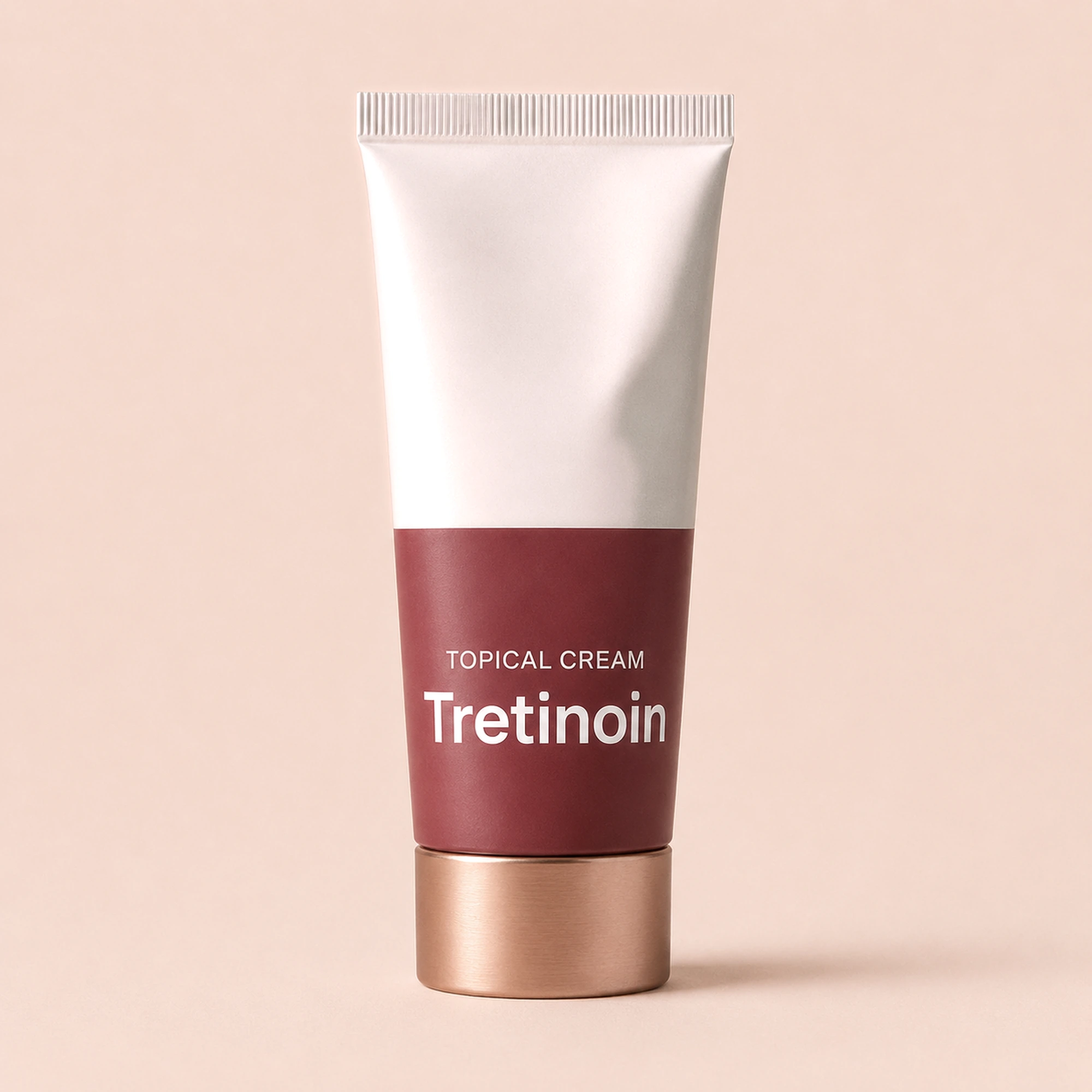
Tretinoin
Prescription-strength retinoic acid (a form of vitamin A), made at a strength your skin can handle. For texture, dark spots, and fine lines.
Opening soonFrom $47/mo$0 until a clinician approves.
- Clinician-reviewed in 24 hours
- Free 2-day shipping
- Pause or cancel anytime
To get a prescription, you need an online visit reviewed by a U.S.-licensed provider. Compounded medicines are made by licensed U.S. pharmacies and are not FDA-approved. Results vary from person to person.
Who it’s for
- Mild to moderate acne or rough texture
- Want a prescription-strength formula picked for your skin type
- Willing to wear SPF daily and stick with it for 8–12 weeks

Go slow at first, and tell us when your skin says it's too much.
How it works
Tretinoin is prescription-strength retinoic acid, a form of vitamin A. It's a long-used prescription cream for acne, sun damage, fine lines, and uneven texture.
Read more
What we can and can't tell you
Tretinoin has been used for decades. Still, there's no shortcut. Results come from steady use over months. And daily sunscreen is part of the treatment.
- Who makes it A LegitScript-verified 503A compounding pharmacy makes it from your prescription. We never use gray-market or overseas suppliers.
- To what standard USP <797> standards for sterile compounding, and USP <800> standards for handling hazardous drugs, where they apply
Compounded medicines are not FDA-approved. The FDA does not review them for safety or effectiveness. They are not generic versions of any brand-name drug, and they are not equivalent to one.
What the first months look like
Getting used to it. Some dryness and mild irritation can happen early. At first, use it only as often as your skin can handle. Strong redness, burning, or peeling means contact your clinician.
Some people get a short-term flare of breakouts as clogged pores (comedones) come to the surface. Irritation is not a sign that it's working. If your skin is very red, burning, or peeling, contact your clinician.
Texture smooths out and acne calms down. Your skin's renewal settles into a normal pace, and new clogged pores stop forming.
Dark spots, fine lines, and sun damage. Rebuilding collagen is the slowest change. Judge it in months, not weeks. And keep wearing sunscreen.
Dosing, step by step
| Amount | Pea-sized — for your whole face; more won't work faster, it just irritates |
|---|---|
| When | At night, on clean dry skin — sunlight breaks tretinoin down |
| Frequency | 3–7 nights per week — go by what your skin can handle; build up slowly |
| Strength | 0.025% start for sensitive skin — your clinician adjusts from there |
| Every day | SPF 30+ — required every day |
To adjust, change how many nights you use it. Don't use more at once. If your skin gets mildly irritated, use it fewer nights a week. If irritation is strong, contact your clinician.
And when it gets rough
Show what helps
- Dryness and peeling Use plenty of moisturizer. Try buffering, which means moisturizer first and tretinoin after. Use it fewer nights a week. If peeling, redness, or burning is strong, contact your clinician.
- Initial breakout (purge) This can happen in the early weeks. If it's severe, painful, or not calming down, message your clinician.
- Photosensitivity Wear SPF 30+ every morning, no exceptions. Don't layer it with AHA/BHA exfoliants or benzoyl peroxide unless your clinician has told you how to space them out.
- Darkening patches (darker skin tones) This means you're using it too hard. Pause and contact your clinician so you can build up more slowly. Don't push through it.
Safety information
A U.S.-licensed clinician reviews every prescription and decides whether this medicine is right for you. During your visit, tell them if any of the following applies to you or your family.
- Common side effects
- Dryness, Peeling, Breakouts at first (purging), Sun sensitivity
- Less common
- Dark spots on darker skin if overused
- Interactions
- Other exfoliants (AHA/BHA): combine with care
- Benzoyl peroxide: may break down tretinoin if you layer them
- Sun exposure: use SPF 30+ every day
Tretinoin can help with acne and some other skin concerns. We pick the strength and how often you use it based on your skin and your goal. Dryness and irritation are common at first. Strong redness, burning, or peeling means you should contact us so we can adjust your plan. Wear sunscreen every day. Tell us if you're pregnant or planning to be before you use it. This formula also has azelaic acid and niacinamide, and we look at each ingredient on its own.

Three steps, no insurance hoops
Take the quiz
About 5 minutes. Tell us your symptoms, history, and goals.
Clinician reviews
A U.S.-licensed clinician looks at your answers within 24 hours. If it's right for you, they write your plan.
Care ships free
Your medication arrives in days. Refills come on their own, and check-ins are included.
Common questions
How much does Tretinoin cost?
How is Tretinoin taken?
What are the side effects of Tretinoin?
Does Tretinoin interact with other medications?
Is Tretinoin FDA-approved?
Read before you start
From the Zappy clinical team, in plain language.

Care that shows up, and stays.