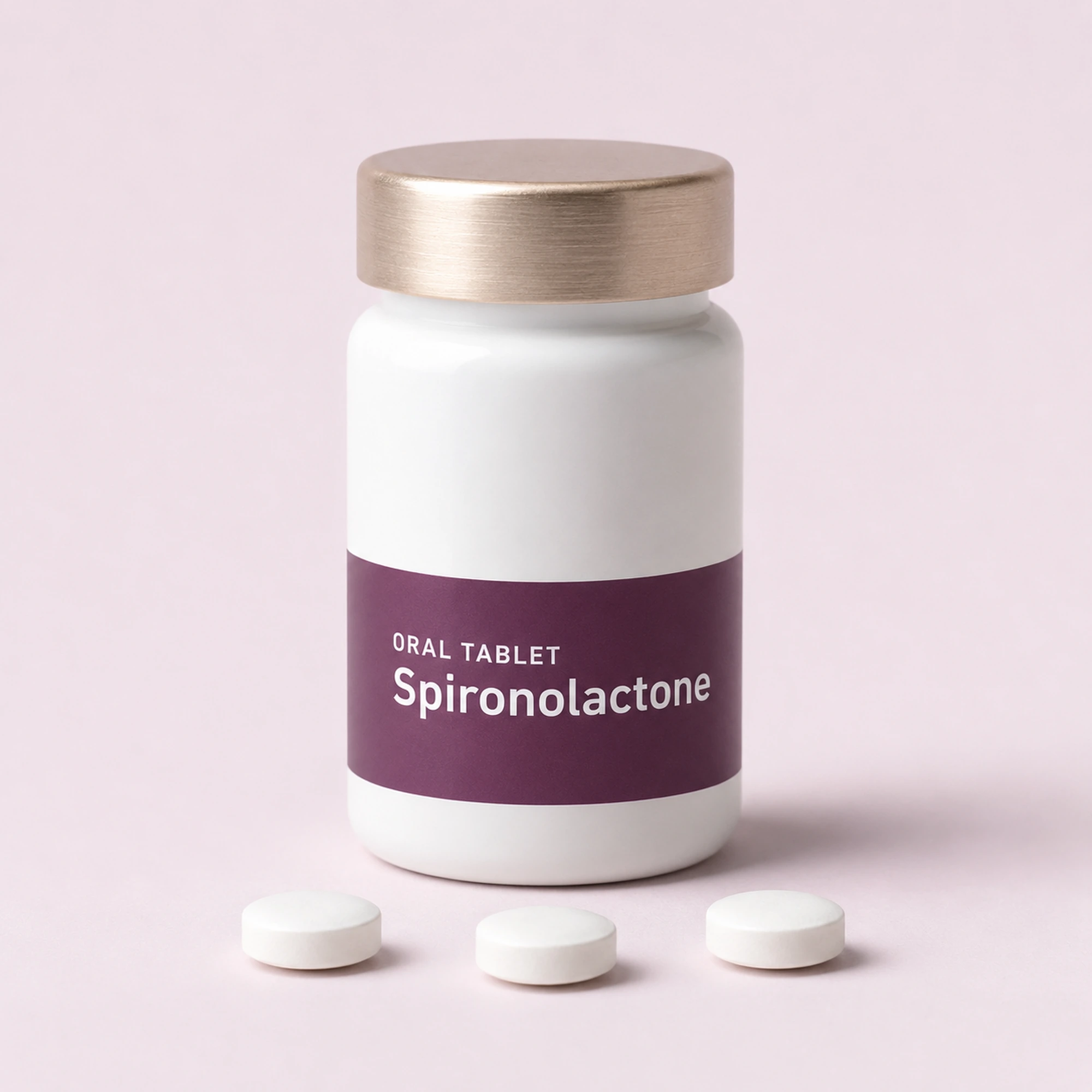
Spironolactone (topical)
Compounded spironolactone you put on your skin, with clindamycin and azelaic acid. It is not FDA-approved for acne, and the evidence for the topical form is limited. It is a different treatment from spironolactone pills.
Opening soonFrom $39/mo$0 until a clinician approves.
- Clinician-reviewed in 24 hours
- Free 2-day shipping
- Pause or cancel anytime
To get a prescription, you need an online visit reviewed by a U.S.-licensed provider. Compounded medicines are made by licensed U.S. pharmacies and are not FDA-approved. Results vary from person to person.
Who it’s for
- Mild to moderate acne or rough texture
- Want a prescription-strength formula picked for your skin type
- Willing to wear SPF daily and stick with it for 8–12 weeks

It shows up along your jaw right on schedule, years after you were told you'd grow out of it.
How it works
Spironolactone blocks the hormone aldosterone, and it also blocks androgens (male hormones). It's taken as a pill for PCOS and hormonal acne. It's used on the skin for hair loss and jawline breakouts.
Read more
What we can and can't tell you
Compounded topical spironolactone is not FDA-approved for acne, and the evidence for it is limited. Most research on spironolactone for acne is on the pills, which are a different treatment. Results from pills don't carry over to the topical. Your clinician will talk through options with stronger evidence.
- Who makes it A LegitScript-verified 503A compounding pharmacy makes it from your prescription. We never use gray-market or overseas suppliers.
- To what standard USP <797> standards for sterile compounding, and USP <800> standards for handling hazardous drugs, where they apply
Compounded medicines are not FDA-approved. The FDA does not review them for safety or effectiveness. They are not generic versions of any brand-name drug, and they are not equivalent to one.
What the first months look like
Putting it on once a day becomes a habit. Acne treatments take months to judge. It's normal to see little change in the early weeks.
Hormonal acne comes and goes with your hormones. Judge progress over full cycles, not single breakouts. Photos are more reliable than memory.
Your clinician looks at how it's working and can adjust the plan, including other treatments with stronger evidence.
Anti-androgens (medicines that block male-type hormones) work only while they're blocking that signal. Talk with your clinician before you stop. Don't do it on your own.
Dosing, step by step
| Topical | 5% formulation, once daily — this product; it can still affect the rest of the body |
|---|---|
| Oral (not this product) | 50–100 mg daily — a different treatment with its own risks and checkups |
| Oral ceiling | Titratable to 200 mg daily — clinician decision only |
This treatment is a compounded topical you put on your skin. Spironolactone pills are a different treatment, with their own risks, interactions, and checkups. Tell your clinician if you are pregnant or planning pregnancy.
And when it gets rough
Show what helps
- Dizziness This is less common. Sit down, drink water, and mention it at your next check-in. If it happens again, message your clinician.
- Increased urination This comes from the pill form, which makes you pee more. It isn't expected with the topical form. If you take the pills and it gets in your way, tell your clinician.
- Menstrual irregularity or breast tenderness These are known with the pill form and may be less likely with the topical, but they can still happen. If you get them, tell your clinician.
- Hyperkalemia (high potassium) This is a risk with the pill form, and your clinician checks for it. It matters most if you take ACE inhibitors, ARBs, potassium supplements, or NSAIDs, or if your kidneys don't work well. Tell us about all of these during your visit.
Safety information
A U.S.-licensed clinician reviews every prescription and decides whether this medicine is right for you. During your visit, tell them if any of the following applies to you or your family.
- Common side effects
- Peeing more (oral), Irregular periods (oral), Breast tenderness (oral)
- Less common
- High potassium (oral), Dizziness
- Rare
- Severe high potassium in people with kidney problems
- Interactions
- ACE inhibitors / ARBs: risk of high potassium
- Potassium supplements: risk of high potassium
- NSAIDs (like ibuprofen): it may work less well, and it's harder on the kidneys
The right acne treatment depends on how bad it is, where it shows up, and your health history. Compounded spironolactone for the skin isn't FDA-approved for acne, and the evidence for it is limited. It isn't the usual first choice, and it can still affect the rest of your body. This formula also contains clindamycin and azelaic acid. Before choosing, we talk through treatments with stronger evidence, and pregnancy precautions. Spironolactone pills are a different treatment, with their own risks and checkups.

Three steps, no insurance hoops
Take the quiz
About 5 minutes. Tell us your symptoms, history, and goals.
Clinician reviews
A U.S.-licensed clinician looks at your answers within 24 hours. If it's right for you, they write your plan.
Care ships free
Your medication arrives in days. Refills come on their own, and check-ins are included.
Common questions
How much does Spironolactone (topical) cost?
How is Spironolactone (topical) taken?
What are the side effects of Spironolactone (topical)?
Does Spironolactone (topical) interact with other medications?
Is Spironolactone (topical) FDA-approved?

Care that shows up, and stays.