On this page
Dull, deflated-looking skin during GLP-1 treatment is often linked to how fast and how much weight you’re losing. Start with a look at what’s going on, plus basic skin care that has evidence behind it. Glutathione isn’t a proven fix in any form.
How weight loss can change your face
GLP-1 weight loss can be large and fast.
Lose a lot of weight and some of it comes off your face. The fat under the skin of your face is stored fat like any other. Less volume looks flatter, older, and duller, even when the skin itself is healthy.
And this isn’t a phase that passes. Weight usually comes back when people stop the medicine, so the leaner face is what staying on treatment looks like. It isn’t a stage you wait out during titration.
Why the surface looks dull in the first weeks
Two more things add to the volume change. GLP-1 medicines slow gastric emptying (how fast food leaves your stomach) and act on the brain circuits that control appetite. So you eat and drink a lot less.
Early on, nausea makes it worse. Nausea tends to track dose escalation, and it often fades as titration (raising the dose step by step) slows. The practical result can be mild dehydration you may not notice while the dose climbs. Dehydrated skin can look dull.
Check these before you buy anything
Hydration. Drink fluids through the day. If you have heart or kidney disease, ask your clinician how much is right for you. Better hydration may help, but it won’t reliably fix dull skin.
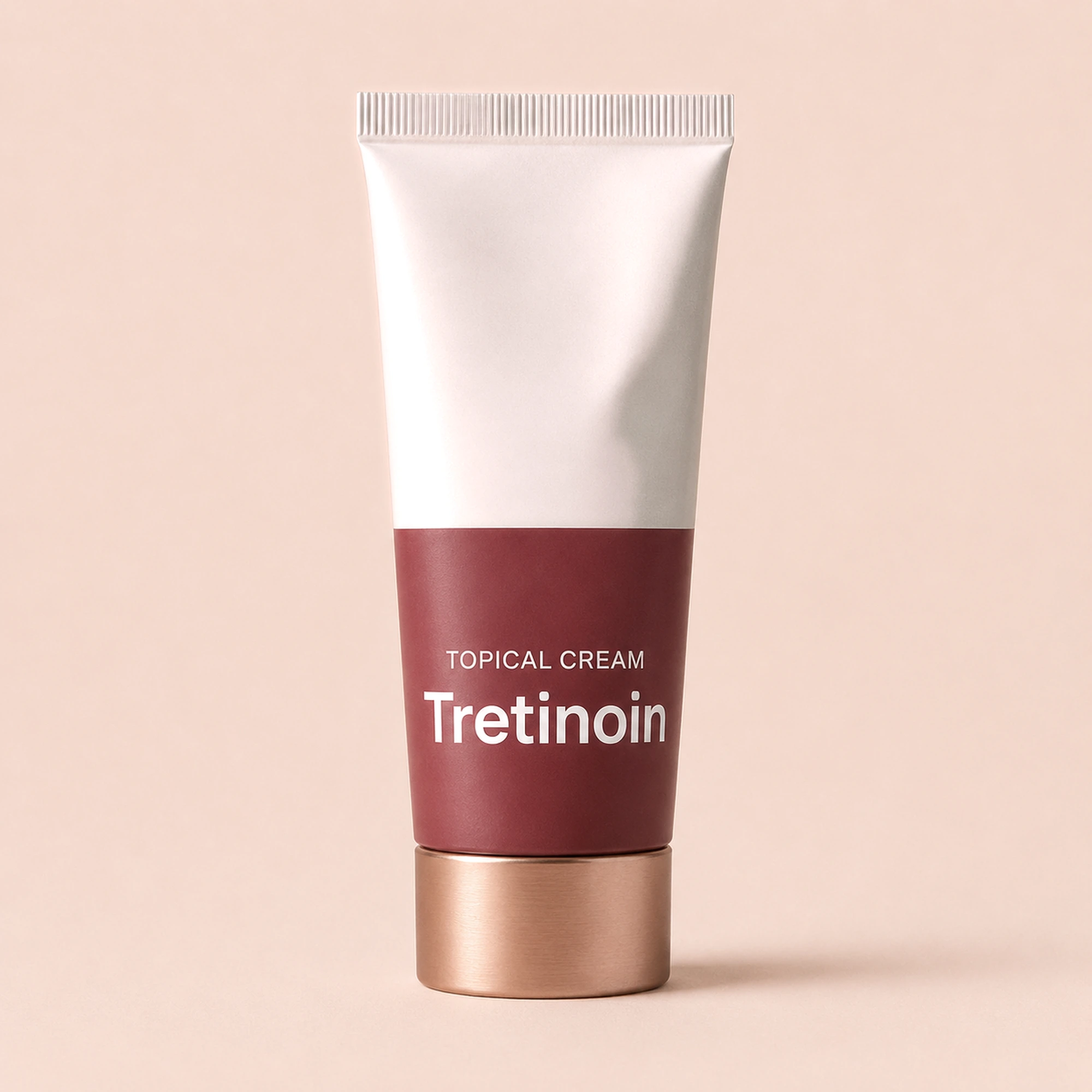
Tretinoin at night, if your clinician thinks it fits your skin. They’ll set how often you use it. Don’t use it if you’re pregnant or trying to be. It binds retinoic acid receptors in skin cells. That keeps skin renewing at a normal pace and builds collagen in the deeper layer. It’s the highest-evidence topical for skin texture, and everything else here is optional next to it.
Sleep. Some people sleep worse in the first weeks on a GLP-1, and your skin does its repair work overnight.
Iron and ferritin. Eating less makes low iron more likely. Low ferritin, which measures your iron stores, can affect how you look and feel. It’s worth asking about if the dullness lasts.
Where glutathione fits
Here’s where the evidence honestly stands. The skin-brightening case for glutathione rests on small studies in narrow groups. There are no large trials behind it.
The proposed mechanism is that glutathione may block tyrosinase, the enzyme that drives melanin (skin pigment) production. So the mechanism is plausible, but the outcome data is thin. It isn’t an established treatment for dull skin.
If you’re thinking about it, the dose, the route, and whether it’s worth doing at all are your clinician’s call, based on your exact product. A US-licensed clinician reviews every Zappy case. Zappy’s glutathione injection is compounded and not FDA-approved. Any effect is unproven.
Pills and shots are both unproven
People often say oral glutathione is simply digested. It’s not that simple. One randomized trial found that daily oral glutathione raised the body’s glutathione stores over several months. But raising a level isn’t the same as improving your skin. Whether oral or injected glutathione does anything useful for skin is unproven.
The caveat we can’t close
Fast weight loss takes some lean mass (muscle and other non-fat tissue) along with fat. The standard countermeasure protects muscle: resistance training plus roughly 1.2–1.6 g of protein per kg of body weight each day. Whether keeping lean mass also keeps your face looking fuller hasn’t been studied. We don’t know.
Here’s the open question to watch. No trial has tested any cream or injection against the facial changes of GLP-1 weight loss. Until one does, our skin plan borrows from general dermatology. Glutathione stays unproven.