On this page
Yes, and weight-loss shots can trigger it too
If you undereat badly enough for long enough, your body sheds hair. Hair is non-essential protein, so when resources run short, it’s one of the first things your body cuts.
The medical name is telogen effluvium. A metabolic shock pushes a batch of hair follicles out of their growth phase all at once, and two to three months later those hairs let go in the shower or on your pillow. The shedding is diffuse (spread across your whole scalp) and reversible. It isn’t pattern baldness, which is a different problem with a different fix.
What telogen effluvium is
Hair follicles cycle between a growth phase (anagen) and a rest-and-shed phase (telogen). Normally the shedding is staggered, so you never notice it.
A major stress on your whole body changes that. Rapid weight loss, low protein over weeks or months, iron deficiency, a high fever, or childbirth can each push a large group of follicles into telogen at the same time. They release two to three months after the trigger, which is why the cause is almost always gone by the time the hair falls out. That delay is the most misleading thing about it.
Why GLP-1 weight loss can be a trigger
This used to be mostly a crash-diet problem. The same physiology shows up with GLP-1 weight loss, because the loss can be large and fast.
The mechanism explains the hair. GLP-1 medicines slow gastric emptying (how fast food leaves your stomach) and act on the brain circuits that control appetite, so intake often drops steeply. When appetite drops, protein can easily fall too.
DXA scans, which measure fat and muscle separately, also show that a real share of GLP-1 weight loss is lean mass rather than fat. That signal is real, though its long-term effect on strength and function isn’t well understood yet.
It’s the same physical stress as an aggressive crash diet, just caused by a medicine, and telogen effluvium follows it the same way. The shedding link comes from well-established dermatology.
The four nutrients worth checking
- Protein. Hair is made of keratin, and when protein intake craters, making keratin is one of the first things to suffer. For anyone losing weight on a GLP-1, clinicians commonly target 1.2–1.6 g of protein per kg of body weight each day to protect lean mass. Getting enough protein may help your hair too, though it isn’t a sure fix.
- Iron and ferritin. Ferritin measures your stored iron. Low ferritin is linked to shedding in women specifically, though the exact cutoff, often quoted around 50 ng/mL, is honestly debated. Iron stores drop early when you eat less.
- Zinc. Your body needs it to make keratin. Vegetarian and very restrictive diets are the most likely to run short.
- Vitamin D. Low vitamin D is linked to several shedding patterns. The link is real, but whether low vitamin D actually causes the shedding isn’t settled.
What to fix, in order
- Ask your clinician about your protein target. During weight loss, clinicians commonly aim for 1.2–1.6 g/kg/day.
- Ask whether bloodwork makes sense. It may include an iron panel, ferritin, B12, vitamin D, zinc, and thyroid. Shedding plus one clearly low value tells you where to aim.
- Fix it with food first, and supplement only what food isn’t moving. More isn’t better, because high-dose supplements don’t regrow hair if you weren’t deficient.
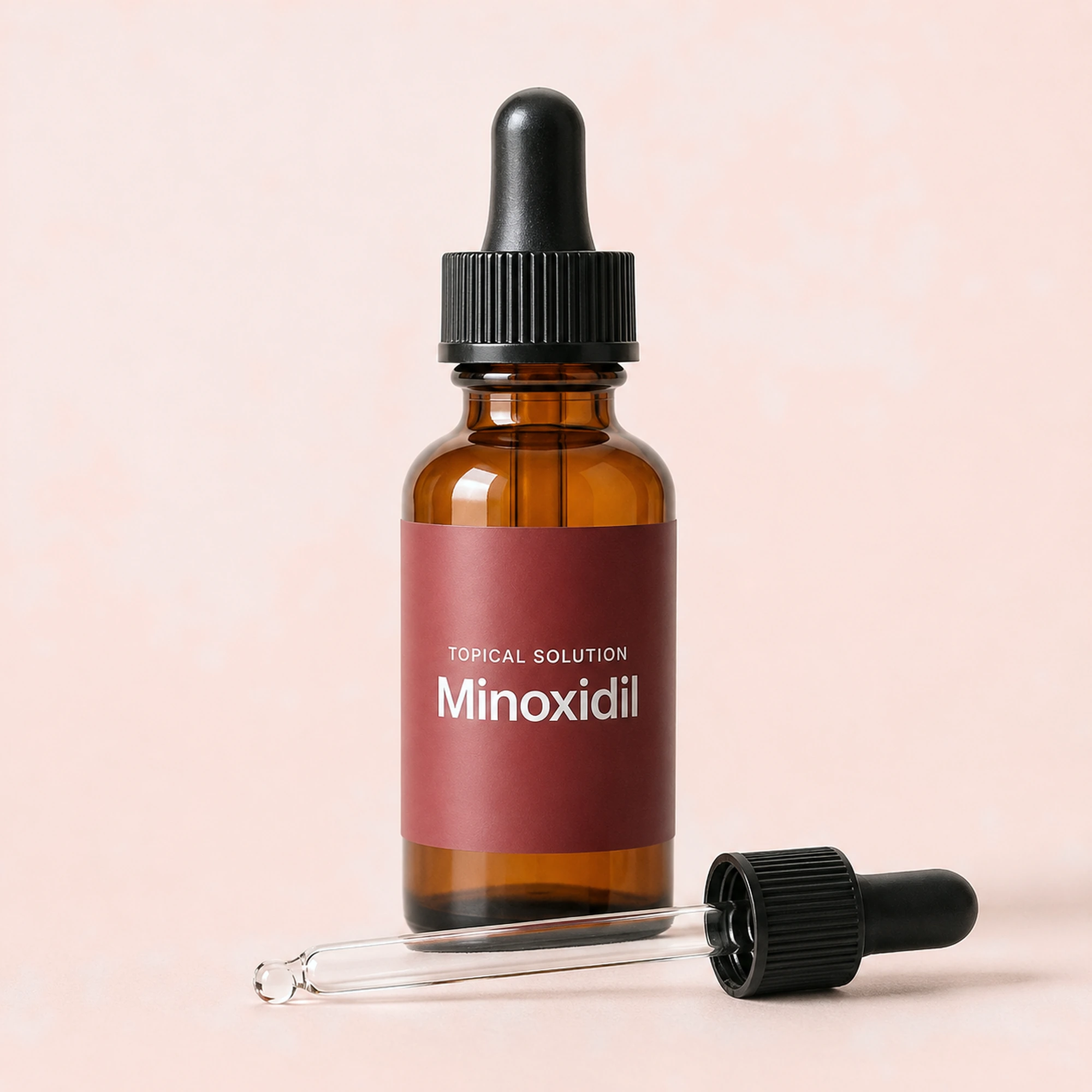
- If regrowth is slow, or the thinning looks like pattern hair loss, ask your clinician about topical minoxidil. It won’t fix your nutrition, and the evidence for it after this kind of shedding is limited. For women with pattern hair loss, Zappy offers a compounded topical minoxidil + spironolactone solution. It’s not FDA-approved, and it isn’t for use in pregnancy.
Don’t quit your GLP-1 to save your hair without talking to your clinician first. Telogen effluvium usually settles on its own once the trigger has passed. Stopping carries its own cost, because much of the weight usually comes back when people stop. That’s a bad trade for temporary shedding.
What to expect, and what we don’t know
Regrowth takes time, because the follicle cycle is slow. How long it takes varies from person to person. If shedding goes on longer than you expect, or you see patches, get checked.
The open question is longer-term. We still lack good data on GLP-1 lean-mass loss and what it means for function over years. Hair may be an early visible marker of a nutrition gap that’s worth closing no matter what the scale says. If you’re starting from scratch, the quiz puts protein, lab tests, and hair treatment into one plan.