How it works
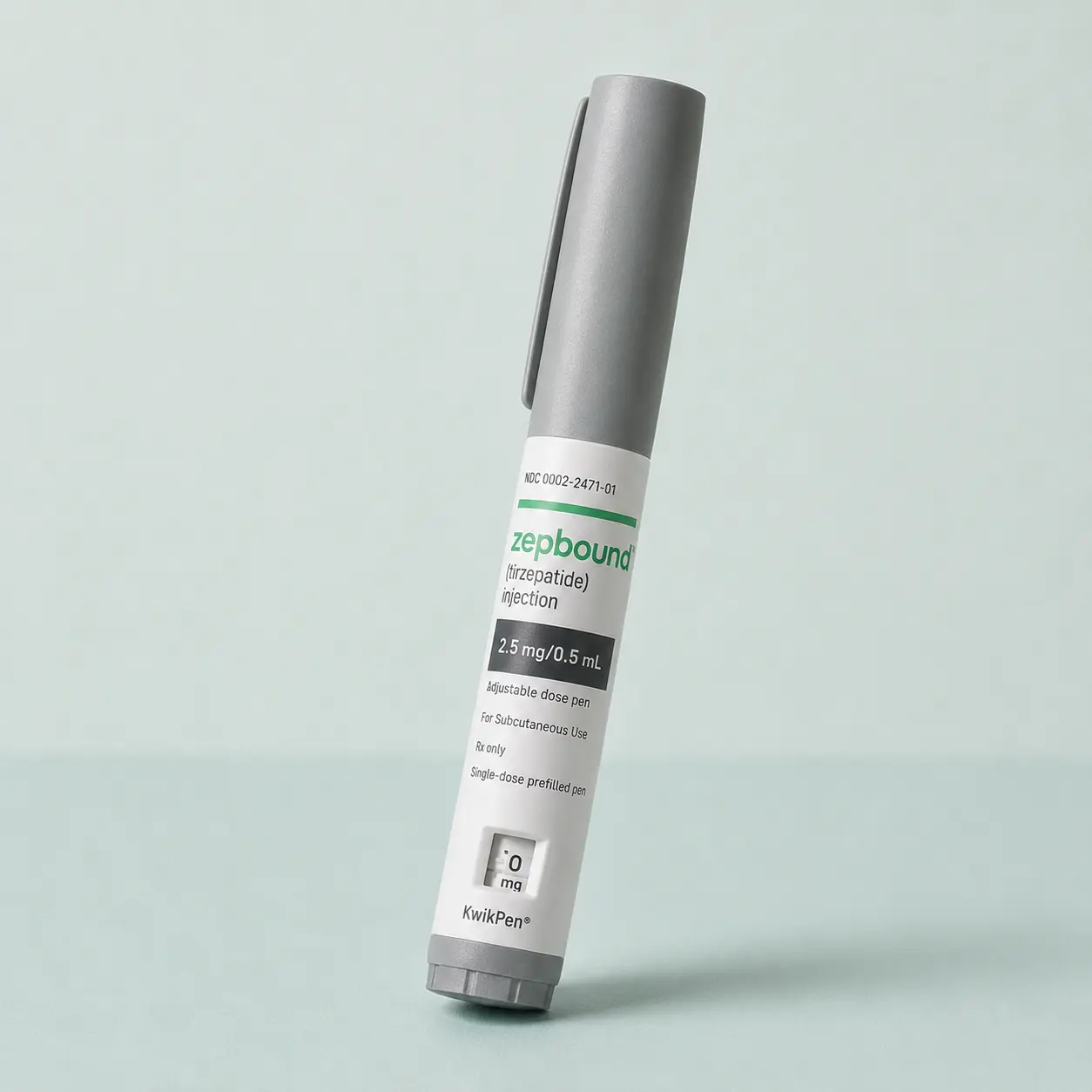
Tirzepatide acts on two receptors. The GLP-1 receptor affects hunger, how fast your stomach empties, and insulin. The GIP receptor affects how well your body responds to insulin and how fat tissue works. Acting on both is linked to more weight loss than GLP-1 alone. It's also linked to handling higher doses better.
The evidence
In the SURMOUNT-1 trial (Jastreboff et al., 2022, NEJM, n=2,539), people on brand-name tirzepatide (Zepbound) 15 mg lost 20.9% of their body weight on average, after 72 weeks. People on placebo lost 3.1%. On 5 mg, people lost 15.0%. On 10 mg, they lost 19.5%. In SURPASS-2, brand-name tirzepatide (Mounjaro) lowered HbA1c (average blood sugar) more than brand-name semaglutide (Ozempic) 1 mg in people with type 2 diabetes. These trials studied the FDA-approved brand-name products that contain this molecule (Mounjaro, Zepbound). The results apply to those products only.
Typical dosing
You start with a 2.5 mg shot under the skin once a week for 4 weeks. Then the dose goes up every 4 weeks (5 → 7.5 → 10 → 12.5 → 15 mg), as long as your body handles it. The maintenance dose is usually 10–15 mg a week.
Side effects
Common
- Nausea
- Diarrhea
- Constipation
- Less appetite
- Tiredness
Less common
- Acid reflux
- Reactions where you inject
Rare
- Pancreatitis (swelling of the pancreas)
- Gallbladder problems
Drug interactions
- Insulin and sulfonylureas: higher risk of low blood sugar
- Birth control pills: may work less well for a while after each dose increase
- Other GLP-1 / GIP medicines: never take them together
Frequently asked
Why act on both GLP-1 and GIP?
Is tirzepatide stronger than semaglutide?
References
- SURMOUNT-1 (brand-name tirzepatide, Zepbound) — Jastreboff et al., NEJM 2022 (n=2,539): 15.0% / 19.5% / 20.9% mean weight loss at 5 / 10 / 15 mg vs 3.1% placebo
- SURMOUNT-4 (brand-name tirzepatide, Zepbound) — Aronne et al., JAMA 2024: withdrawal led to ~14% regain over one year vs continued treatment