On this page
The short answer
Yes, the shedding is real, and no, the drug isn’t attacking your hair follicles. Hair loss on semaglutide or tirzepatide is usually telogen effluvium. It’s the same kind of shedding that can follow childbirth, a bad fever, or a crash diet. It’s usually triggered by how fast and how far your weight drops. It often shows up a few months in, and the hair usually grows back. It’s still worth checking for other causes.
Why the weight loss can trigger it
GLP-1 medicines can move weight fast.
A loss that large and that quick is a major stress on your whole body. Hair follicles respond to it the way they respond to any big stress. An unusually large share of hairs leave the growth (anagen) phase and drop into the resting (telogen) phase at once. About three months later, they shed together.
That delay is why the timing doesn’t seem to match your injections. The hair in your drain today was pushed out of its cycle months ago.
Two more details sharpen the picture. First, the appetite suppression that makes these drugs work also makes it easy to badly undereat. They slow gastric emptying (how fast food leaves your stomach) and act on the brain circuits that control appetite. Protein can easily fall too.
Second, DXA scans measure fat and muscle separately. They show that a real share of GLP-1 weight loss is lean mass rather than just fat. That finding is real, though its long-term effects on strength and function aren’t well understood yet. Hair is made of protein. A body that’s short on amino acids isn’t going to spend them on your hairline.
What the months can look like
Everyone’s timeline is different, so treat this as a rough guide:
- The first months: often nothing visible yet.
- A few months in: shedding can pick up. Showers look alarming, and your part may widen.
- After that: shedding usually slows, and fine new growth can appear.
- Later: density often returns, though it can take many months.
If yours doesn’t follow this pattern, get checked.
What actually helps
Protein first. This is the one step with a real mechanism behind it. Clinicians commonly target 1.2–1.6 g of protein per kg of body weight each day to protect lean mass during rapid weight loss. Reaching that is harder than it sounds when a drug is suppressing your appetite. Low protein is one possible cause worth checking.
Talk about the pace of loss. For the Wegovy (semaglutide) injection, the labeled titration (raising the dose step by step) ramps slowly anyway. It starts at 0.25 mg weekly and steps up roughly every four weeks (0.25 → 0.5 → 1.0 → 1.7 → 2.4 mg). It goes slower if side effects hit. If shedding is severe, your clinician may consider holding a dose longer. Don’t change it on your own.
Check for common deficiencies. Low iron (ferritin), B12, vitamin D, or zinc can each cause diffuse shedding on their own. So can thyroid problems, checked with a TSH test. These are common in people eating less, so get a basic blood panel instead of guessing.
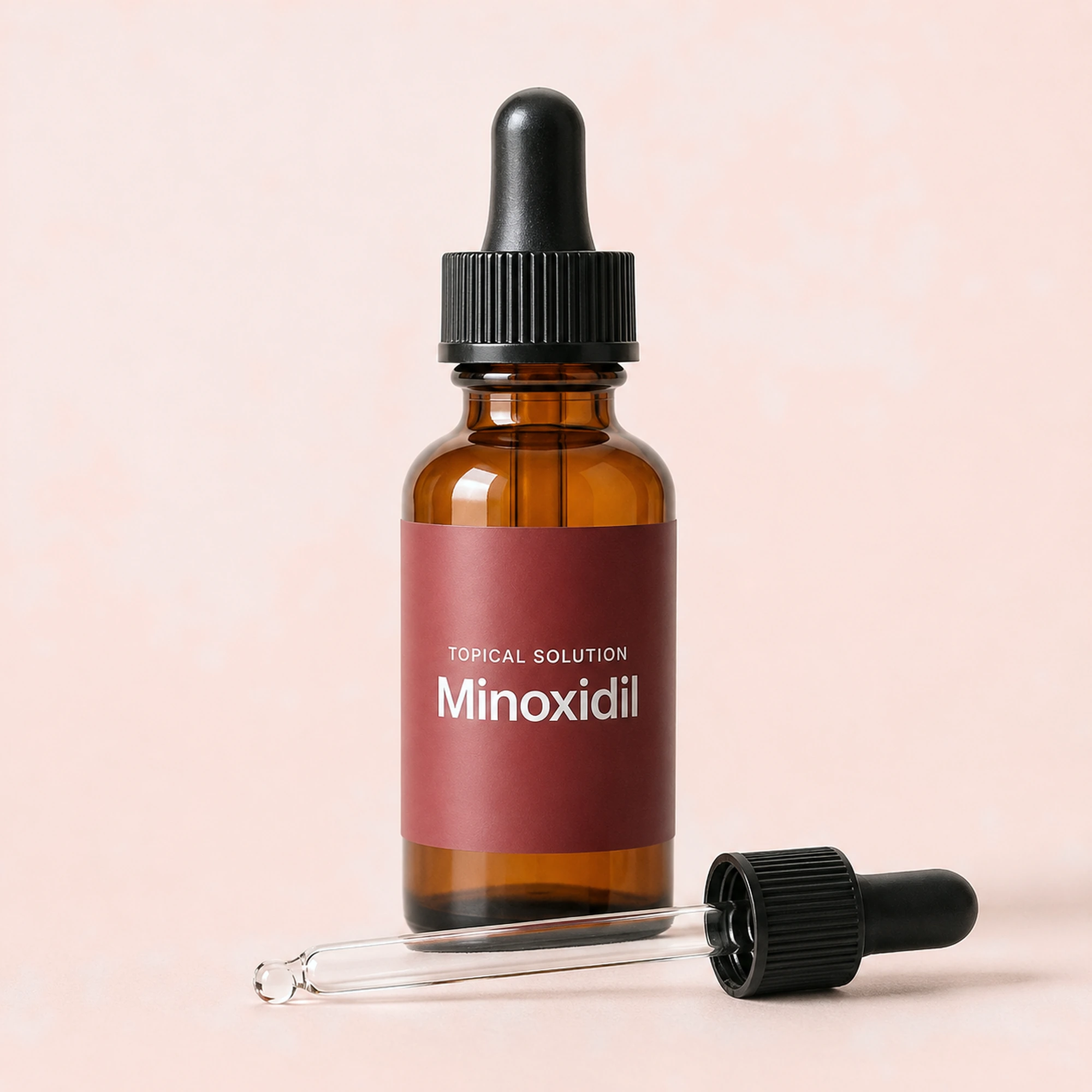
Ask about topical minoxidil. It’s a first-line treatment for pattern hair loss. Some clinicians also use it off-label (outside its approved use) after telogen effluvium. Two honest caveats apply. It won’t stop shedding that’s already under way. And the evidence for telogen effluvium is thinner than for androgenetic alopecia (pattern hair loss), so it may not speed recovery.
For women with pattern hair loss, Zappy offers a compounded topical minoxidil + spironolactone solution. It’s not FDA-approved, and it isn’t for use in pregnancy. For men with pattern hair loss, Zappy offers finasteride pills with topical minoxidil.
What doesn’t help: biotin, unless you’re truly deficient, which is rare. Most “hair growth” supplements do nothing for telogen effluvium, so spend the money on protein instead.
When it isn’t telogen effluvium
Diffuse thinning that recovers is the expected pattern. Bald patches, or shedding that keeps getting worse, point to a different problem. It might be pattern hair loss or thyroid disease, and the GLP-1 may just be a bystander. That’s the time to get evaluated rather than wait it out. Weighing whether to start or adjust treatment? Our clinicians review every case and can plan your dosing around a side effect like this.
The question nobody has answered yet
Staying on the drug is usually what keeps the weight off, since much of it tends to come back when people stop. So the lower weight, with its easy risk of undereating, isn’t a phase. For many people it’s the new baseline for years.
Could that long-term state leave a subtler mark on hair, like thinner regrowth or slower cycles? That question applies to people who lose a lot of weight and keep it off. Nobody has tracked that yet. For the shedding in front of you, the usual course is well understood. Get checked for other causes, eat enough, and give it time.