On this page
- Takeaways
- How much weight, exactly
- The result that isn’t about weight
- Where the appetite goes
- The schedule, and why it’s slow on purpose
- What month one is actually like
- What happens when you stop
- Some of what you lose is muscle
- When tirzepatide is the better call
- How this works at Zappy
- The question nobody has answered yet
Semaglutide works, and that sentence needs no hedge. In the trial that defined its weight-loss effect, people lost 14.9% of their body weight on average over 68 weeks. The honest complications come after that: the dose climbs slowly, the first month can be uncomfortable, some of the loss is muscle, and stopping usually undoes the result.
Here’s our position up front. Semaglutide is the right first choice for most people starting a GLP-1, because it has the longer track record. So far, it’s also the only drug in its class with a completed cardiovascular outcomes trial in people with overweight or obesity and no diabetes. Tirzepatide’s trial numbers are bigger. If those two facts seem to pull in different directions, the rest of this guide explains why.
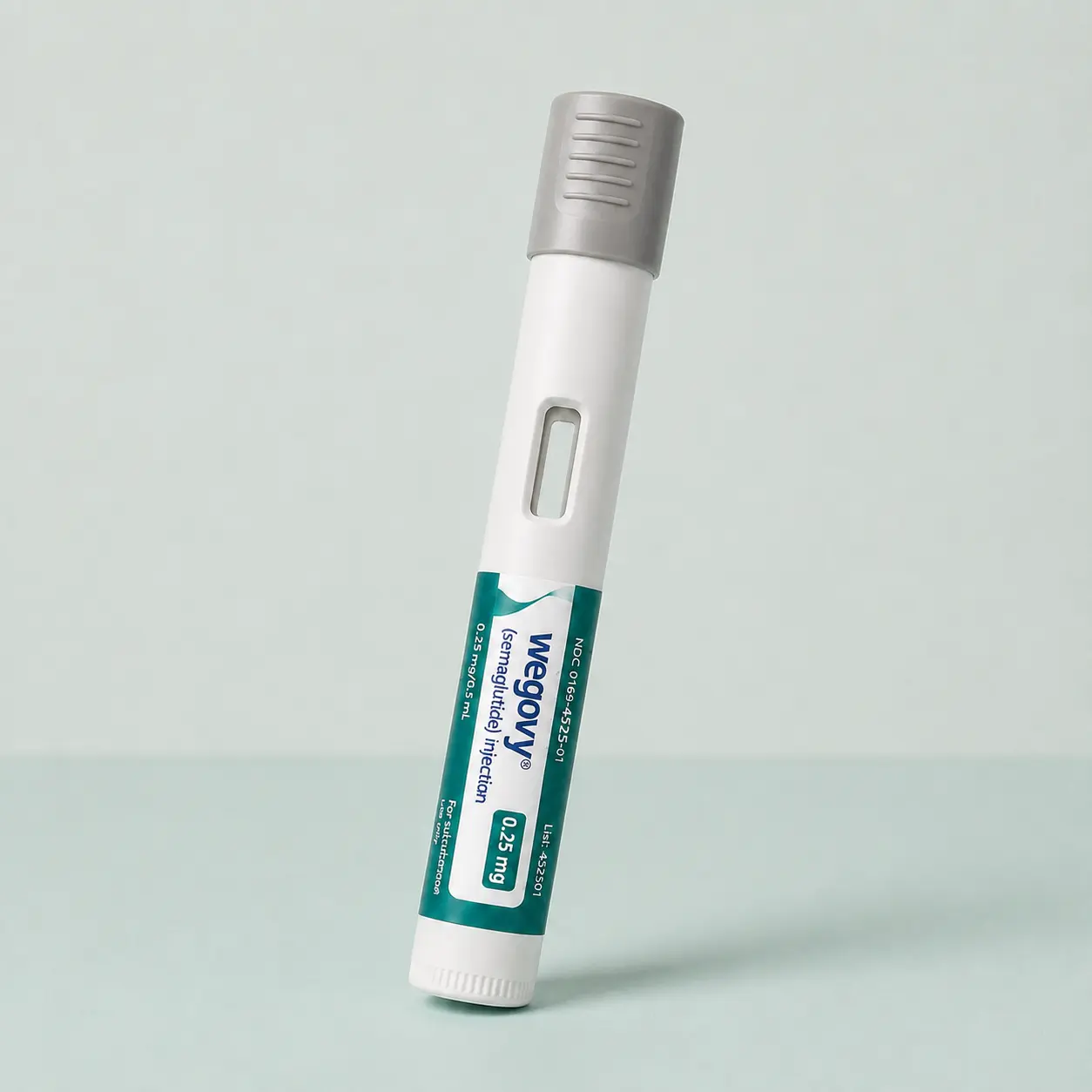
One basic fact before the evidence. Semaglutide is the active ingredient in four FDA-approved products: Wegovy and Ozempic (once-weekly injections), and the Wegovy pill and Rybelsus (daily tablets), which differ in label, dose, and price. The trial evidence below comes from these brand-name products.
How much weight, exactly
STEP 1 (Wilding et al., NEJM 2021) is the anchor trial. It randomly assigned 1,961 adults with obesity and no diabetes to brand-name semaglutide (Wegovy) 2.4 mg weekly or placebo. At week 68, the Wegovy group had lost 14.9% of their body weight on average, and the placebo group had lost 2.4%. The 12.5-point gap is the drug effect. To picture it, 14.9% of a 250-lb person is about 37 lb.
SURMOUNT-1 (Jastreboff et al., NEJM 2022) is the matching trial for brand-name tirzepatide (Zepbound), with 2,539 adults over 72 weeks. Loss scaled with dose: 15.0% at 5 mg, 19.5% at 10 mg, and 20.9% at 15 mg, compared with 3.1% on placebo.
It’s tempting to just subtract, since tirzepatide’s top dose landed six points above semaglutide’s result. But those numbers come from different trials, in different people, over different lengths of time (68 vs 72 weeks). Treat the gap as an estimate.
The result that isn’t about weight
SELECT (Lincoff et al., NEJM 2023) is the trial that made brand-name semaglutide (Wegovy) a cardiovascular drug too. It enrolled 17,604 adults with overweight or obesity and established cardiovascular disease, none with diabetes. They were randomly assigned to semaglutide 2.4 mg or placebo. Major heart events (death from heart disease, heart attack, and stroke, counted together) fell by 20% compared with placebo, a hazard ratio of 0.80.
Be careful with that 20%. It’s a relative drop, and how much it helps you depends on your starting risk. The result is strongest for exactly the people SELECT studied on brand-name semaglutide (Wegovy): those who already have heart disease. If that’s you, this is the strongest reason in this guide to pick semaglutide in particular. Tirzepatide doesn’t have a finished heart outcomes trial in this group yet.
Where the appetite goes
Semaglutide is a GLP-1 receptor agonist. That means it’s a man-made copy of a hormone your gut releases after meals. How it works is well understood. It slows gastric emptying (how fast your stomach empties), so food stays longer and fullness arrives earlier. It acts on the appetite centers in your brain, which is why food takes up less of your attention between meals. And it helps your body release insulin when your blood sugar is high. Tirzepatide does all of that and also works on a second hormone, called GIP.
That same action causes the main side effect, because nausea is what a slow stomach feels like. In STEP 1, which tested brand-name semaglutide (Wegovy), nausea was the most common side effect, and it clustered during dose increases. Each step up slows the stomach further before your gut adapts. That’s why nausea fades when titration slows. It’s also why the fix is simple: smaller meals, eaten slowly, with less fat. Fat slows your stomach on its own, so it adds to what the drug does.
The schedule, and why it’s slow on purpose
On the Wegovy label, titration starts at 0.25 mg weekly and then goes to 0.5, 1.0, 1.7, and 2.4 mg, stepping up about every 4 weeks. That’s about four months to the full dose if nothing slows you down, and side effects are a good reason to slow down. Holding a dose an extra month doesn’t mean you failed, because the plan is built to flex that way.
The 0.25 mg starting dose is a tolerability dose. Its job is to train your gut, and it isn’t meant to move the scale. If week three feels underwhelming, that’s the plan working.
A hold can come at any step. The first steps above the starting dose are when your gut has to adapt fastest, but where you’ll need one really depends on the person. We can’t tell you ahead of time where you’ll need to slow down, and anyone who names a specific step is describing an average you may not fit.
Two different things lead to a hold, and each calls for a different response. The common one is tolerability: nausea that hasn’t faded into the background, or a week where food simply stopped fitting. Four more weeks at the same dose is often the fix, and that’s the label working as designed. If it isn’t, your clinician takes another look.
The second reason gets talked about less. Sometimes the dose you’re on is already doing the job: your appetite is manageable and the scale is moving. The only thing another step would add is more gastrointestinal side effects, for a benefit you already have. There’s no prize for reaching the top dose. The dose that works is the dose that works.
A dose change is one of the few times “talk to your clinician” really matters. Titration speed is the main way to control side effects, and it should be adjusted for each person instead of simply endured.
What month one is actually like
STEP 1, the main trial of brand-name semaglutide (Wegovy), measured weight at week 68. It didn’t measure how week one feels. Here’s what we’d expect from how the drug works. The first change most people notice is appetite, as meals end sooner and food pulls at you less between them. Nausea, if it comes, tends to show up in the days after a shot and in the weeks after a dose increase.
Two symptoms mean you should message your clinician the day they show up. Don’t wait for your next check-in. One is severe belly pain that won’t go away, and the other is not being able to keep fluids down. Both are uncommon, and neither is something to wait out.
What happens when you stop
Here’s the least popular fact in this guide: the weight comes back. STEP 4 (Rubino et al., JAMA 2021) took people who had been on brand-name semaglutide (Wegovy) for 20 weeks and randomly assigned them to continue or switch to placebo. Stopping led to a lot of regain, while staying on kept the loss. SURMOUNT-4 (Aronne et al., JAMA 2024) ran the same design with brand-name tirzepatide (Zepbound) after 36 weeks. People switched to placebo regained about 14% of their body weight over the next year, while those who continued lost about 5.5% more.
Experts agree on what this means. Obesity behaves like a chronic condition, and these drugs treat it without curing it. Once you’re off the drug, the appetite signals it had quieted come back, and the weight follows.
So here’s some advice from a company that sells semaglutide. If your plan is twelve weeks before a wedding and then stopping, don’t start, because you’ll spend the money, deal with the nausea, and most likely gain the weight back. Start if you’re ready to treat this for years, or if you have a clear plan for coming off.
What would change that advice? STEP 4, on brand-name semaglutide (Wegovy), and SURMOUNT-4, on brand-name tirzepatide (Zepbound), both tested stopping all at once. No trial has settled whether a slow, supervised taper helps you keep more of the loss, even with strength training and diet support. If a trial ever shows that, the math for short-term use changes.
Some of what you lose is muscle
The evidence here is one grade weaker than the trials above: probable, but incomplete. DXA substudies of the GLP-1 trials (body-composition scans run on a subset of participants) show that a real share of the weight lost is lean mass, which includes muscle. How much does that matter for strength and daily function years from now? We don’t know. Don’t trust anyone who gives you an exact “muscle percentage” as if it were settled.
The countermeasure is simple and standard: strength training while you lose, and about 1.2–1.6 g of protein per kilogram of body weight per day, the range clinicians usually target. Start both before the scale moves.
When tirzepatide is the better call
There are a few situations, listed here from most to least evidence.
If you’ve plateaued at semaglutide’s full dose and still have weight to lose, the cross-trial numbers are the argument for switching. In SURMOUNT-1, the top dose of brand-name tirzepatide (Zepbound) landed six points past what brand-name semaglutide (Wegovy) did in STEP 1. They were different trials, but they point the same way. No trial has tested that switch directly. Still, switching drugs can be a reasonable option to talk through with your clinician.
The same logic applies if you want the most total weight loss from the start.
If you have insulin resistance or prediabetes, you’ll hear that tirzepatide’s added action on GIP makes it a better fit. That idea comes from how the drug works and hasn’t been proven in completed outcome trials, so it’s plausible but unproven.
And there’s a case that goes the other way. If you have established cardiovascular disease, SELECT means brand-name semaglutide (Wegovy) is the one with the outcomes trial behind it. The full comparison is at semaglutide vs tirzepatide.
How this works at Zappy
Zappy is cash-pay, with no insurance required, and you can use FSA or HSA funds. We offer compounded semaglutide and tirzepatide prepared by LegitScript-verified 503A pharmacies in the US. Compounded semaglutide is a separate category from the brand-name products. It’s not FDA-approved, and it’s not an FDA-approved generic or equivalent of any of them. That’s a fact about how it’s regulated, and you should know it up front.
A US-licensed clinician reviews every case and adjusts your titration as you go. Since titration speed is the main side effect lever, that’s the part of the service that really matters. Screening is also where the hard exclusions live. For example, if you or a family member has had medullary thyroid carcinoma or MEN 2, you can’t take any drug of this type. To find out if you’d start, and at what dose, take the intake quiz.
Takeaways
Evidence: On brand-name semaglutide (Wegovy) 2.4 mg, people lost 14.9% of their body weight on average at 68 weeks (STEP 1). On the top dose of brand-name tirzepatide (Zepbound), they lost 20.9% over 72 weeks (SURMOUNT-1). In people with heart disease, brand-name semaglutide (Wegovy) lowered major heart events by 20% in relative terms (SELECT). Stopping undid the loss. In SURMOUNT-4, about 14% of body weight came back within a year of switching to placebo, and STEP 4 showed the same pattern.
Expert agreement: Obesity is treated as a long-term condition. The dose goes up slowly and slows further for side effects. Strength training plus 1.2–1.6 g/kg/day of protein is the standard way to protect muscle.
Our opinion: Start with semaglutide if you have heart disease or want the longer track record. Choose tirzepatide if you want the most total loss or have stalled at 2.4 mg. And nobody should start either one without deciding ahead of time what year two looks like.
The question nobody has answered yet
The open question isn’t whether the drugs work, because the trials above settle that. It’s what the lost weight is made of, and what that means ten years from now. The DXA scans say lean mass goes down. We don’t yet know much about long-term effects on strength, getting around, or fracture risk. No trial has tracked those in people who stay on a GLP-1 for years compared with people who stop and regain. Until that trial is run, strength training and 1.2–1.6 g/kg/day of protein are the best answer we have. They push back against the problem, but they don’t prove anything.
Next on the watch list is tirzepatide’s own cardiovascular outcomes trial in people without diabetes, and whether it matches the SELECT result for brand-name semaglutide (Wegovy) when it reports. It isn’t expected to finish before late 2027. If it does, semaglutide’s strongest specific advantage narrows to its longer track record.