On this page
- A meal hormone that lasts a week
- Semaglutide: the drug with a heart trial behind it
- Tirzepatide: the bigger weight numbers
- How clinicians choose between them
- The first 16 weeks are a ramp
- Some of what you lose is muscle
- What happens when you stop
- Insurance or cash: the honest version
- The short version
- The trial we’re waiting for
Here’s our position first, because the rest of this guide explains it. In randomized trials, full-dose brand-name GLP-1 medications (Wegovy and Zepbound) produced 14.9–20.9% average weight loss. Brand-name semaglutide (Wegovy) lowers the risk of heart attack and stroke in people who already have heart disease. The loss holds while you stay on the drug. Stopping without a maintenance plan usually reverses it. You’re renting the result, and you don’t get to own it. So the right way to think about this is long-term therapy, with a protein target, resistance training, and a maintenance plan attached. It isn’t a 12-week kickstart.
Where the evidence is strong, we state it plainly, and where it’s thin, we say so. Here’s where everything stands.
A meal hormone that lasts a week
GLP-1 (glucagon-like peptide-1) is a hormone your gut releases after you eat. It does three things. It slows gastric emptying (how fast food leaves your stomach). It prompts your pancreas to release insulin when blood sugar rises. And it signals fullness to the appetite centers in your brain. Your own GLP-1 lasts only minutes. Semaglutide and tirzepatide are engineered versions that resist breakdown, so one weekly injection keeps working for seven days. (The Wegovy pill works differently. It’s semaglutide taken as a tablet once a day.) Tirzepatide also acts on a second gut hormone, called GIP.
Two everyday experiences follow directly from that mechanism.
The first is the quiet. Hunger, cravings, and the background pull toward food fade, which people often describe as “food noise” going silent. That’s the brain effect of the drug, felt from the inside.
The second is nausea. Slower gastric emptying means food sits in your stomach longer, and each dose increase slows it further before your gut adapts. That’s why nausea follows dose increases and fades as they slow down. We cover how to manage it below.
Semaglutide: the drug with a heart trial behind it
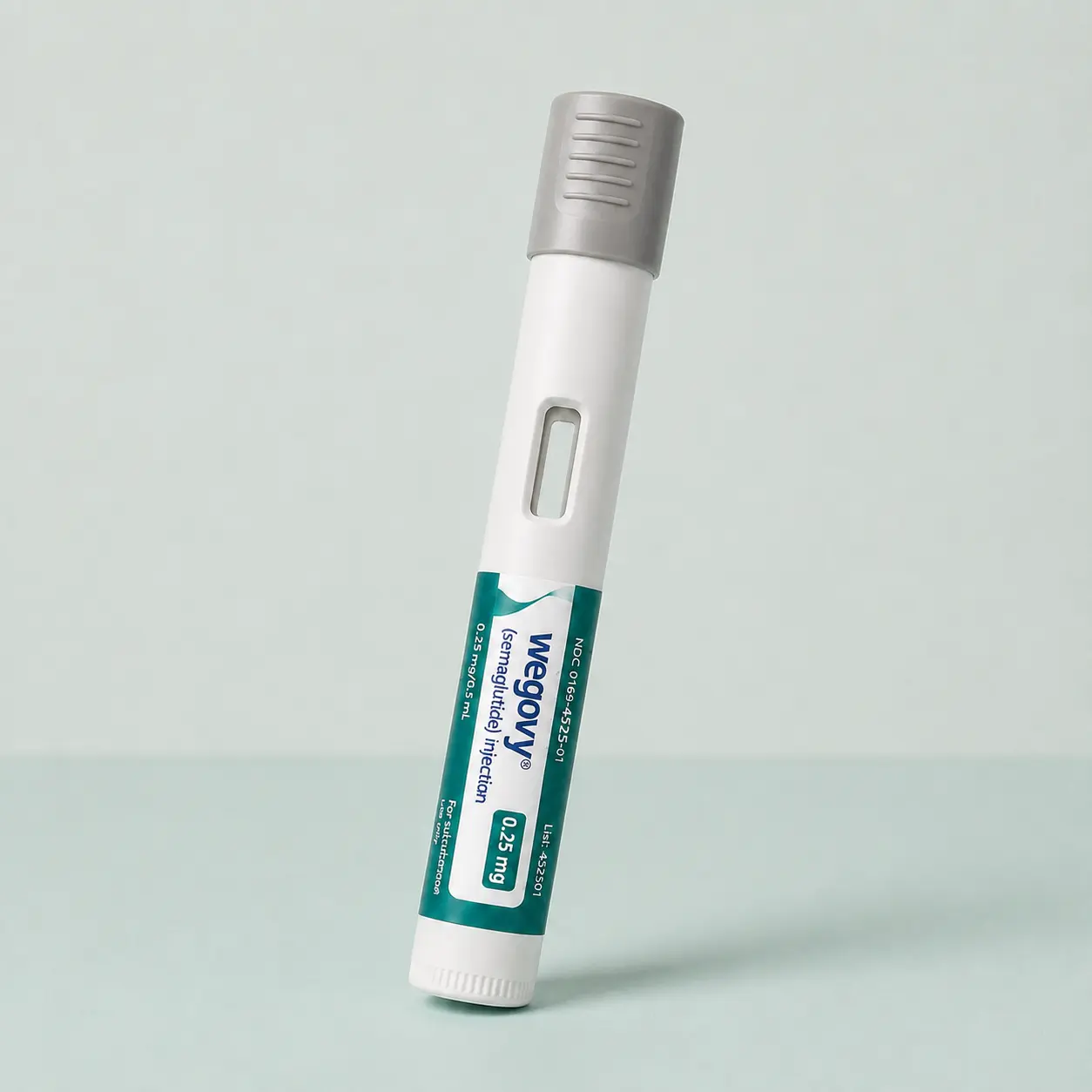
Semaglutide is the drug in Wegovy, a weekly injection with a 2.4 mg maintenance dose, and in the Wegovy pill, a 25 mg tablet taken once a day. The same drug is sold as Ozempic (an injection) and Rybelsus (a pill) for type 2 diabetes. Its main trial is STEP 1 (Wilding et al., NEJM 2021). It randomized 1,961 adults with obesity, or overweight plus a weight-related condition, and no diabetes to weekly brand-name semaglutide (Wegovy) or placebo. At week 68, the Wegovy group had lost 14.9% of their body weight on average, compared with 2.4% on placebo. Nausea was the most common side effect, and it clustered during dose increases.
Then came the trial that changed what these drugs are for. SELECT (Lincoff et al., NEJM 2023) tested Wegovy in 17,604 adults with overweight or obesity and established heart disease, again with no diabetes. It counted major cardiovascular events: heart attack, stroke, or death from cardiovascular causes. Brand-name semaglutide (Wegovy) 2.4 mg reduced those events by 20% (hazard ratio 0.80). That’s a relative reduction, so how much it helps you depends on how high your risk was to begin with.
Seventeen thousand people is the scale of a true outcome trial. As of this guide’s last review, no other weight-loss medication has published comparable cardiovascular results in people without diabetes. If heart disease is part of your history, that difference is worth weighing with your clinician.
Tirzepatide: the bigger weight numbers
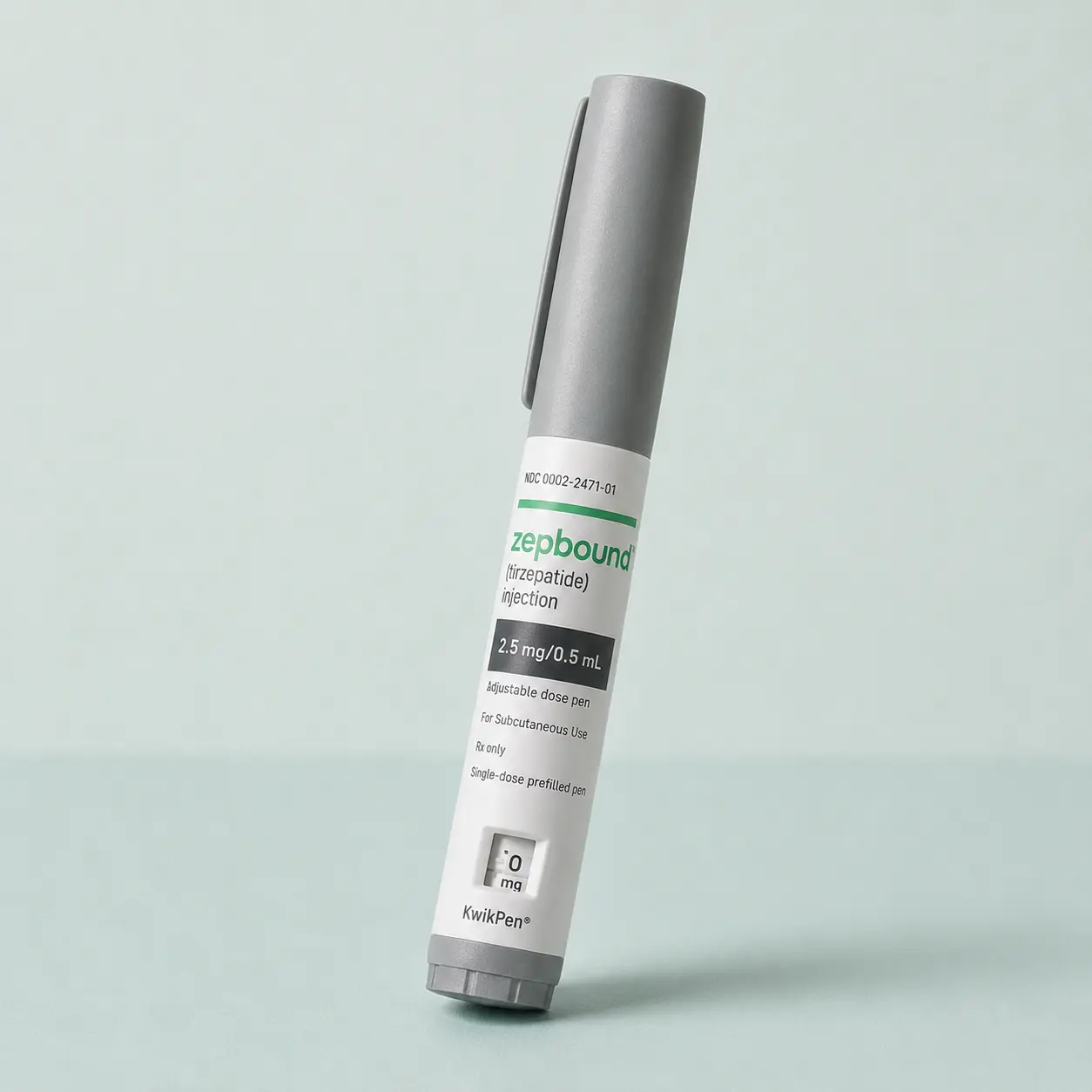
Tirzepatide is the drug in Zepbound, and at diabetes doses it’s sold as Mounjaro. It’s the one that also acts on GIP. In SURMOUNT-1 (Jastreboff et al., NEJM 2022), 2,539 adults spent 72 weeks on one of three doses of brand-name tirzepatide (Zepbound) or placebo. Higher Zepbound doses produced more weight loss in a clean pattern: 15.0% at 5 mg, 19.5% at 10 mg, and 20.9% at 15 mg, compared with 3.1% on placebo.
Compare that with STEP 1 carefully. Zepbound’s lowest dose matched full-dose Wegovy (15.0% vs 14.9%), and its top dose beat it by six percentage points. But these numbers come from different trials in different groups of people. Treat the gap as a general direction rather than an exact measurement.
What brand-name tirzepatide (Zepbound) doesn’t have yet is a published cardiovascular outcomes trial in people without diabetes to match SELECT. (In people with type 2 diabetes, brand-name tirzepatide (Mounjaro) now has heart outcome data, and in August 2026 the FDA approved it to lower heart risk in that group.) So the evidence tilts both ways at once: tirzepatide leads on weight loss, and semaglutide leads on proven heart benefit. It would be tidier to call them tied on both, but that would be wrong.
How clinicians choose between them
If you have heart disease, clinicians often lean toward semaglutide, because Wegovy has proven outcome data. If your main goal is the most weight loss and your history is otherwise clear, many lean toward tirzepatide, because Zepbound reached 20.9% against 14.9% for Wegovy. Those results were measured on the brand-name products, in separate trials. Cost, availability, and your own side-effect history break the ties. You and your clinician make that call case by case.
The dose-by-dose comparison is here: semaglutide vs tirzepatide.
The first 16 weeks are a ramp
Standard semaglutide titration (raising the dose a little at a time) starts at 0.25 mg weekly and steps up about every 4 weeks: 0.25 → 0.5 → 1.0 → 1.7 → 2.4 mg. It goes slower whenever side effects call for it. Starting low gives your gut time to adjust to slower emptying.
Expect nausea to follow the ramp. In STEP 1, which tested brand-name semaglutide (Wegovy), it was the most common side effect and clustered during dose increases, which is exactly what the mechanism predicts. If a step up hits you hard, the fix is to stay on your current dose longer instead of gritting your teeth through it. Your clinician makes that call. At Zappy, a U.S.-licensed clinician reviews every case and adjusts the titration. Slowing the ramp is a normal option, and it doesn’t mean you failed.
Here’s what to do during the ramp. This is clinical advice rather than trial data. Drink plenty of water, and hold your protein target (numbers in the next section). Take several short walks instead of one long one, which often helps the nausea. And give your clinician a complete list of the pills you take. Slower gastric emptying can change how quickly other drugs are absorbed, and any timing changes depend on you.
Some of what you lose is muscle
DXA substudies of the GLP-1 trials ran body-composition scans on a subset of participants. They show that a meaningful share of the weight lost is lean mass (mostly muscle) as well as fat. Keep the two parts of this evidence separate.
What we know: the lean mass loss shows up on the scans, consistently enough that you should plan around it.
What we don’t know: the long-term effects on function. Whether that loss turns into weakness, frailty, or fracture risk years later hasn’t been studied. We don’t know.
The countermeasure is standard and has little downside. Do resistance training, and eat 1.2–1.6 g of protein per kilogram of body weight per day, the range clinicians commonly target. For a 90 kg (198 lb) person, that’s 108–144 g of protein a day. That won’t happen by accident when your appetite is suppressed, so it has to be scheduled like a medication.
What happens when you stop
Two trials answer this directly, and they agree.
In STEP 4 (Rubino et al., JAMA 2021), every participant took brand-name semaglutide (Wegovy) for 20 weeks. Then some continued while the rest switched to placebo. The people who continued held their loss, and the people who switched regained a substantial amount. The weight loss is maintained by staying on the drug.
SURMOUNT-4 (Aronne et al., JAMA 2024) ran a harder test with brand-name tirzepatide (Zepbound): 36 weeks on the drug, then randomization. Over the following year, those switched to placebo regained about 14% of their body weight, while those who stayed on Zepbound lost about 5.5% more.
The conclusion isn’t subtle. Stopping without a maintenance plan usually reverses the loss.
Our clinical view follows, and this part is our opinion. Start these drugs planning for the long term, and budget for years rather than months. Build the protein and training habits while you’re on treatment, because they’re the only part you keep for free if you ever stop. Here’s what would change our view: a trial showing a way to stop that preserves the loss. Neither STEP 4 (Wegovy) nor SURMOUNT-4 (Zepbound) tested one, since both switched people straight to placebo with no taper.
Insurance or cash: the honest version
If your insurance covers Wegovy or Zepbound, use that coverage. Zappy is cash-pay, so that advice sends you elsewhere, and it’s still the right default.
If you’re paying cash, Zappy offers two kinds of options. Brand-name Wegovy, the Wegovy pill, and Zepbound are FDA-approved. You pay the drug maker’s cash price, plus a Zappy care membership. Compounded semaglutide and tirzepatide are prepared by LegitScript-verified 503A pharmacies in the U.S. If you choose compounded, keep two facts in mind. First, compounded preparations are not FDA-approved. They haven’t gone through FDA review, and they are not generic versions of Wegovy or Zepbound. Second, a U.S.-licensed clinician reviews every Zappy case and sets and adjusts your titration. You never need insurance, and FSA and HSA funds are eligible.
Whether you qualify at all depends on weight thresholds, conditions that rule the drug out, and interactions with what you already take. That’s a screening question that a blog can’t answer: see if you qualify.
The short version
Evidence (randomized trials): Brand-name semaglutide (Wegovy) 2.4 mg averaged 14.9% weight loss at 68 weeks (STEP 1). Brand-name tirzepatide (Zepbound) averaged 15.0–20.9%, depending on dose, at 72 weeks (SURMOUNT-1). In people with existing heart disease, Wegovy cut major cardiovascular events by 20% in relative terms (SELECT). Stopping either Wegovy or Zepbound led to substantial regain (STEP 4, SURMOUNT-4).
Consensus practice: Titrate slowly, taking semaglutide from 0.25 to 2.4 mg over about 16 weeks and going slower with side effects. Protect lean mass with 1.2–1.6 g/kg/day of protein plus resistance training.
Our opinion: Treat it as long-term therapy from day one. Choose the branded product if your insurance covers it.
The trial we’re waiting for
We’re waiting for a trial on how to come off. STEP 4 and SURMOUNT-4, the stopping trials for brand-name semaglutide (Wegovy) and brand-name tirzepatide (Zepbound), tested one exit, an abrupt switch to placebo, and both found regain. Neither tested a taper, a lower maintenance dose, intermittent dosing, or an intensive lifestyle program timed to stopping. So the obvious question, “Am I on this forever?”, has no trial-grade answer yet. The honest answer today is that the loss lasts while you’re on the drug, and the trials we have don’t show a proven way off.
We’re watching for two results. One is a trial that tests ways to stop. The other is long-term data on function for the lean mass question, because the scan changes are documented but the strength and frailty outcomes are not. When either one arrives, this guide will change.