On this page
Weight loss is the GLP-1’s job. Some people ask about adding NAD+ for the tiredness that can come during treatment. No trial shows that adding NAD+ to a GLP-1 helps with that. It does not add to the weight loss either.
What the medicine does
GLP-1s slow gastric emptying (how fast food leaves your stomach). They act on the brain circuits that control appetite, and they help your body release insulin. Tirzepatide also acts on a second hormone, called GIP.
Nausea is the most common side effect, and slower gastric emptying is part of the reason. It clusters during dose escalation and often fades as titration (raising the dose step by step) slows down. Your clinician sets the dose steps for your exact product. They go slower if side effects are rough.
At Zappy, our semaglutide and tirzepatide are compounded by LegitScript-verified 503A US pharmacies under physician oversight. Compounded preparations are not FDA-approved. They are not FDA-approved generics or equivalents of the brand-name drugs. A US-licensed clinician reviews every case and sets your titration.
Tiredness while the dose goes up
While the dose is going up, some people feel tired. Calories are down, and they feel flat. Part of that can be the adjustment to eating less. But tiredness has many causes, so it needs a real look. Your clinician can check how much you eat and drink, your sleep, your mood, your other medicines, and basic labs. Whether a low NAD+ level plays any part isn’t established, because there’s no data on it, and we won’t pretend otherwise.
Where NAD+ fits, and where it doesn’t
Here’s the honest version. NAD+ does not drive weight loss. If you want something to speed up your results, this isn’t it. We’ll tell you that before you buy it.
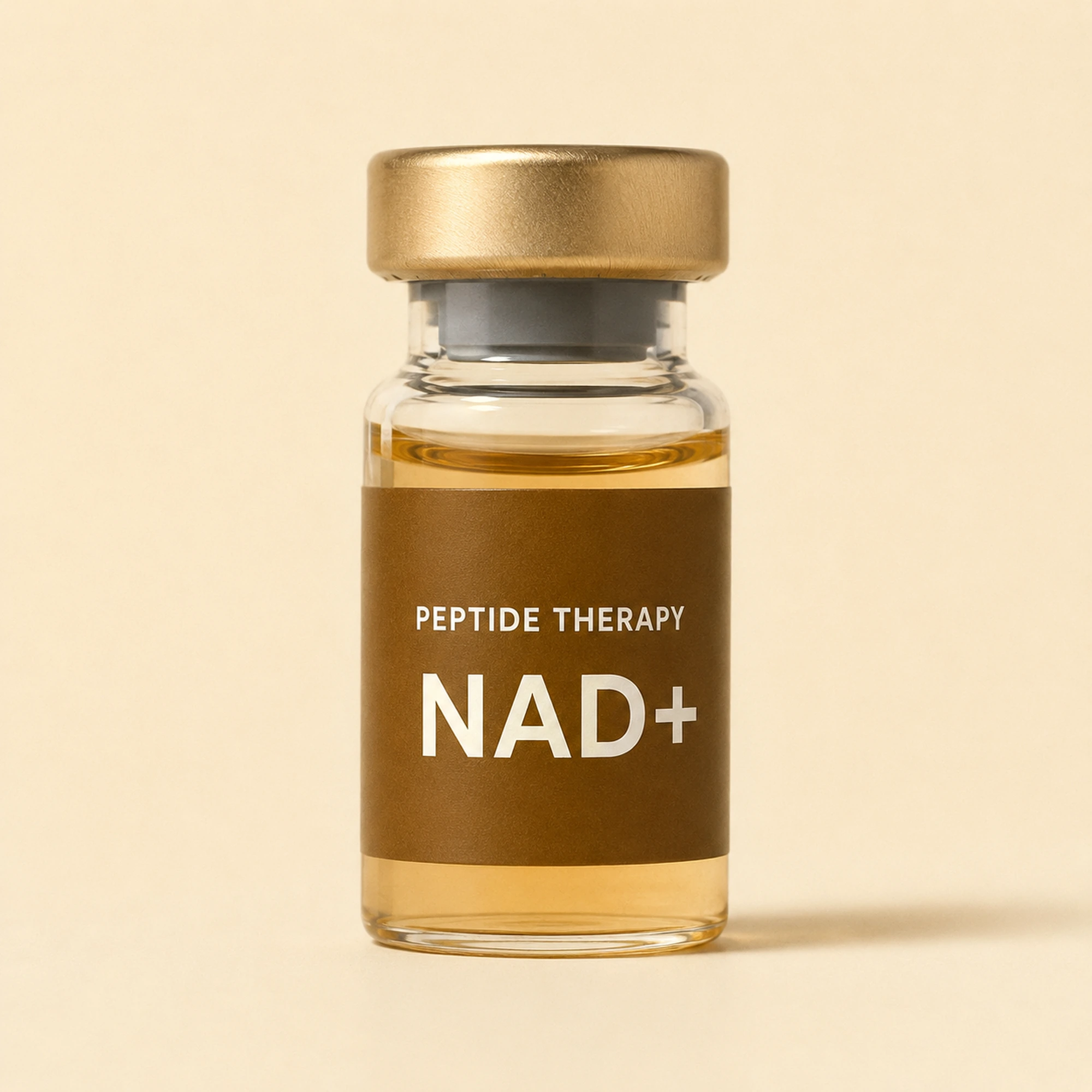
Adding NAD+ to a GLP-1 is not an established treatment for tiredness, and the pair isn’t a proven combination. There’s no randomized trial of NAD+ for GLP-1 fatigue, so the evidence is thin. Zappy’s NAD+ injection is compounded and not FDA-approved, and the FDA has reported reactions after NAD+ injections. If you and your clinician decide to try it anyway, the dose and schedule are set for your exact product. It shouldn’t come before a check for other causes.
What would change our view? A randomized trial in people on a GLP-1 that compares NAD+ with a placebo and measures how tired they feel. That trial hasn’t been done.
Protect your muscle, and don’t stop the medicine
Two things matter more than any add-on.
First, protect your lean mass. Fast weight loss takes some muscle along with fat. The standard countermeasure is resistance training plus protein. Clinicians commonly aim for 1.2–1.6 g per kg of body weight each day. Long-term effects on strength and function aren’t well understood yet, so this step probably helps but isn’t proven. Still, it’s the step with the best support, and an injection won’t replace it.
Second, the weight usually stays off only while you stay on the medicine. When people stop, much of the weight tends to come back. The GLP-1 is what maintains the result, and NAD+ plays no part in that. Talk with your clinician before you plan to come off semaglutide or tirzepatide. Stopping without a maintenance plan usually reverses the loss.
Bottom line
The GLP-1 is doing the work. NAD+ has no proven role in helping you feel better on it, and no trial backs it. If you feel run down, start with a check for the usual causes. The open question we’re watching is whether the lean mass lost during fast titration leads to worse long-term function. That data could change how fast doses are raised. It isn’t in yet.