On this page
“Peptide” is a chemistry word, and it doesn’t name one kind of treatment. A peptide is a short chain of 2 to 50 amino acids, folded into a shape your cells read as a signal. Insulin is a peptide. So is semaglutide. So are a dozen compounds sold online on the strength of a mechanism diagram and not much else.
The evidence behind peptides varies more than almost anywhere in medicine. At one end are peptide drugs tested in large randomized trials. At the other end are peptides whose entire human dataset would fit on an index card. That’s not a reason to write off the whole category, but it is a reason to read carefully. The useful skill is knowing which end a given peptide sits at. In this guide, we take a clear position wherever the evidence lets us.
What a peptide is
A peptide is a short chain of amino acids that works as a messenger. It binds a receptor on a cell and tells that cell to do one specific thing. That might be releasing a hormone, opening a channel, or slowing a process down. Your body makes thousands of them, and a peptide medicine copies or blocks one of those signals on purpose.
Why is it a shot? That part is settled science. Your gut digests peptides into their amino acids, the same way it handles the protein in a steak. So a peptide swallowed as a pill is mostly destroyed before it reaches your blood. Oral semaglutide gets around this with an absorption enhancer and a much larger dose, but it’s the rare exception.
GLP-1 medicines have the most evidence
This is where peptides earn their reputation, and we’ll be blunt about how uneven the evidence is. GLP-1 receptor agonists include semaglutide and tirzepatide, which acts on two hormone receptors. The brand-name versions of these drugs were tested in large randomized trials, including trials that tracked heart attacks and strokes as well as weight. Most of the peptide market has never attempted a trial like that.
How they work, and why they cause nausea
The mechanism is settled, so we’ll state it plainly. GLP-1 medicines do three things:
- They slow gastric emptying, meaning food leaves your stomach more slowly and you stay full longer.
- They act on appetite circuits in the hypothalamus and hindbrain, which lowers your drive to eat.
- They help your body release insulin when your blood sugar is up.
Tirzepatide also acts on a second hormone receptor, called GIP. Researchers are still working out how much that second pathway adds.
Nausea is the most common side effect, and slower gastric emptying is part of the reason. It clusters during dose escalation and often fades as the dose holds steady. Because it’s tied to how the drug works, it’s fairly predictable, and the dosing schedule is built around it.
For the Wegovy (semaglutide) injection, the labeled titration (raising the dose step by step) starts at 0.25 mg weekly and steps up roughly every four weeks: 0.25 → 0.5 → 1.0 → 1.7 → 2.4 mg. It goes slower if side effects flare. Starting low lets your gut adapt. Raise the dose too fast and you get nausea you didn’t need. If side effects are hard to handle, that’s a reason to check in with your clinician before the next step.
Stop the medicine and the weight comes back
The marketing skips this part, but it’s the most important thing to understand before you start. GLP-1 weight loss usually lasts only while you stay on the medicine. When people stop, much of the weight tends to come back.
Here’s our clinical opinion. These are treatments for a chronic condition, not a short course like antibiotics. Stopping without a maintenance plan usually reverses the result. That doesn’t mean the drug failed, because this is what treating an appetite-regulation disorder looks like. If you and your clinician decide you’ll come off, do it on purpose and with a follow-up plan, including diet and training support.
Some of the weight you lose is muscle
Here our confidence has to drop, because the evidence is real but incomplete. Any rapid weight loss takes some lean mass (muscle and other non-fat tissue) along with fat, and GLP-1 weight loss is no exception. It matters more when the total loss is large.
The countermeasure is simple: resistance training plus enough protein. Clinicians commonly aim for roughly 1.2–1.6 g per kg of body weight each day. What we really don’t know yet is the long-term effect. Does that lean-mass loss show up years later as measurable differences in strength, mobility, or fracture risk? Large trials haven’t generated that data. Anyone who tells you the muscle question is settled, in either direction, is ahead of the evidence.
The other peptides have much weaker evidence
Not everything sold as a peptide has large trials behind it. We’d rather say so than sell past it.
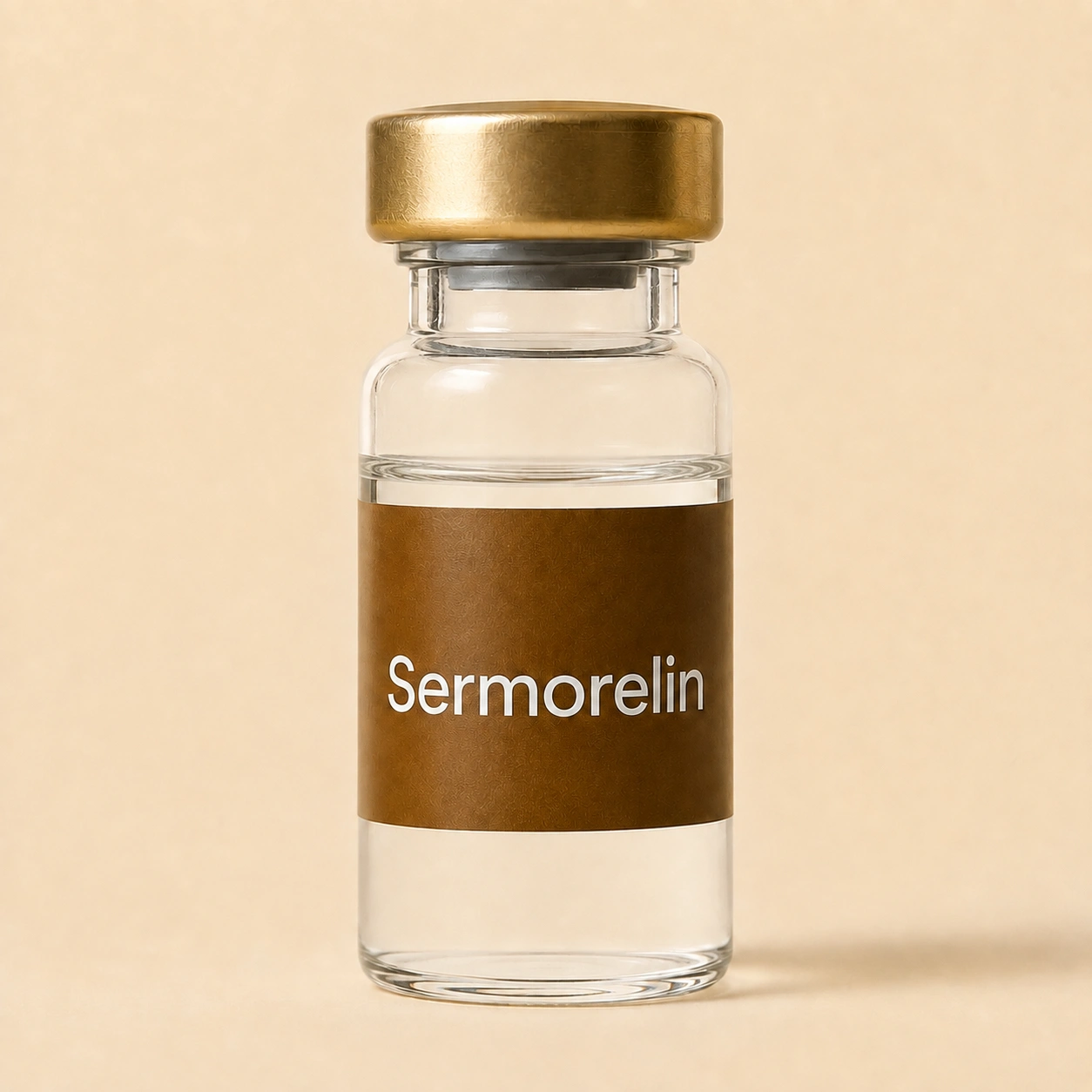
Sermorelin is a growth-hormone-releasing hormone analog. It signals your pituitary gland to release its own growth hormone. That keeps your body’s natural feedback loop in place, while injected HGH overrides it. We understand how it works. What’s thin is the outcome evidence, since there are no large trials for the body-composition or anti-aging claims often attached to it. The physiology is reasonable, but hard outcomes are limited.
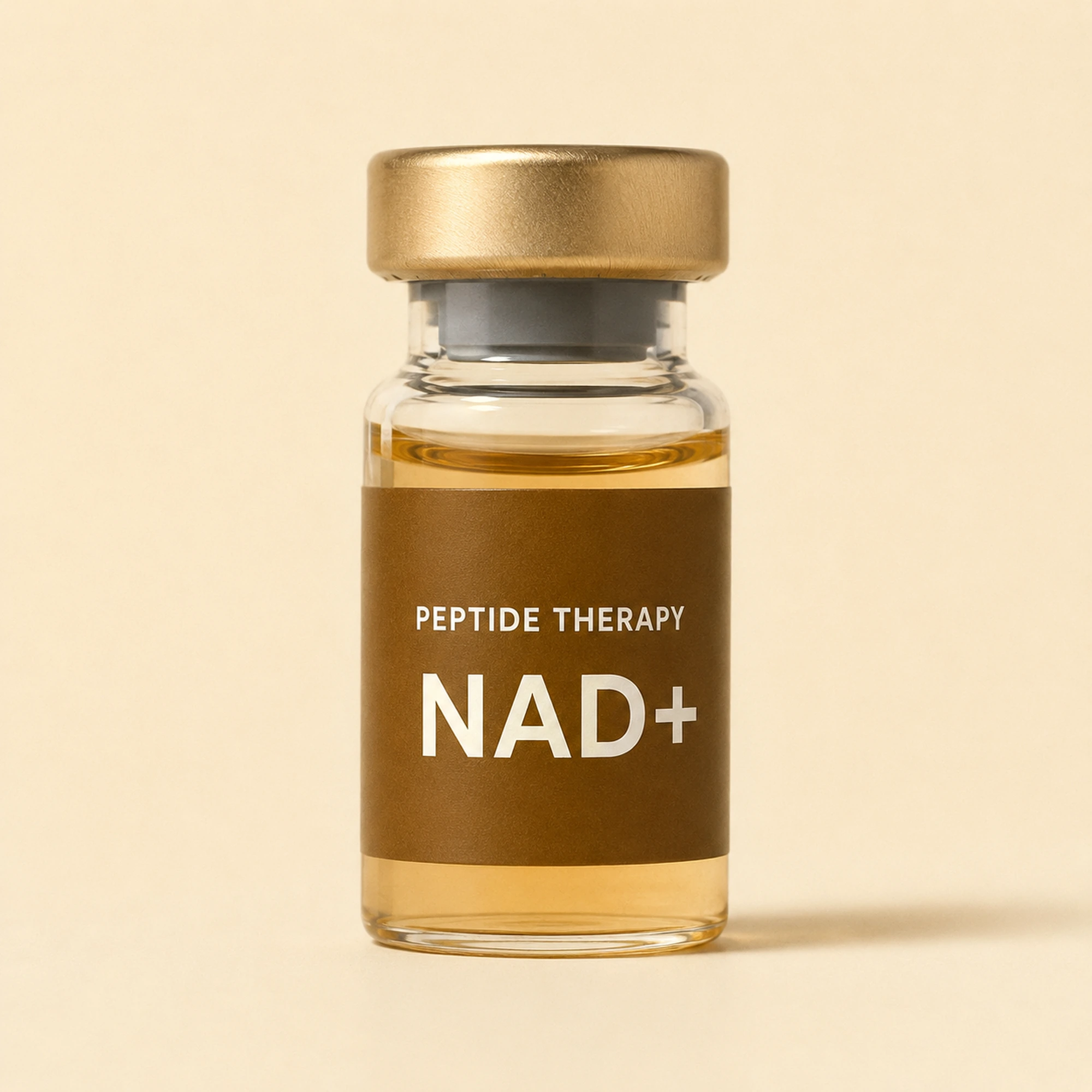
Glutathione is an antioxidant your body makes, built from three amino acids. NAD+ is a helper molecule (a coenzyme) rather than a peptide. It often shows up in the same treatment plans. Your cells need it for energy production and DNA repair, and its levels fall with age. Both are real parts of your body’s chemistry. But neither has the human trials to back up the “detox,” “energy,” or “anti-aging” claims they’re sold with. If you use them, know that the evidence is plausible on paper but largely unproven.
Zappy’s sermorelin, NAD+, and glutathione are compounded and not FDA-approved. The FDA has also reported reactions after NAD+ injections, some linked to contamination. A clinician reviews your health history before prescribing any of them.
That’s the honest shape of this category. One corner has large drug trials behind it. Several other corners run on theory alone.
Who this isn’t for, and how we run it
This is the wrong tool if you have an active cancer or if you’re pregnant or trying to be. It’s also wrong if you want a peptide to replace sleep, food, or training. Peptides work alongside the boring basics. They can’t replace them. GLP-1 medicines also have specific reasons some people shouldn’t take them, and your clinician will screen for those. This is exactly where a real medical review matters more than a checkout page.
The compounded semaglutide and tirzepatide we work with are prepared by LegitScript-verified 503A US pharmacies under physician oversight. These compounded preparations are not FDA-approved. They are not FDA-approved generics or equivalents of the brand-name products. Care is cash-pay with no insurance needed, and it’s FSA/HSA eligible. A US-licensed clinician reviews every case and sets your titration.
Avoid gray-market “research only” peptide vials sold online. Nobody has checked whether they’re sterile, where they came from, or whether the dose is right. If you want to start, the intake is a clinical questionnaire, not a shopping cart.
The question we’re watching
The open question is what GLP-1 weight loss is made of over a decade. Nobody has run large trials on long-term strength, mobility, and fracture risk in people who stay on these drugs for years. Do resistance training and 1.2–1.6 g/kg of daily protein fully offset the muscle loss, or only partly? That’s the trial we’d most like to see. Until it reports, “protect your muscle while you lose the weight” is a clinical judgment call. It isn’t a proven protocol, and we treat it that way.