On this page
In its main trial, brand-name tirzepatide (Zepbound) led to average weight loss of up to 20.9% of body weight over 72 weeks. If losing a lot of weight is your goal and you can handle a slow ramp, it’s a strong option. The catch is that, in people without diabetes, it lacks the heart outcome data semaglutide already has.
Two targets in one drug
Tirzepatide is one weekly injection that switches on two gut-hormone receptors: GLP-1 and GIP (glucose-dependent insulinotropic polypeptide). Semaglutide turns on only the first. That second receptor is the whole reason tirzepatide counts as its own drug. The details on the drug itself are on the tirzepatide ingredient page.
The GLP-1 part does what most people have already read about. It acts on the appetite centers in your brain and slows gastric emptying (how fast your stomach empties). It also raises insulin, but only when your blood sugar is high.
What GIP adds is where the science is still unsettled. GIP is a second gut hormone that helps control blood sugar. In theory, adding its receptor should boost the effect, and the trial numbers are in fact higher. But experts still argue about how much of tirzepatide’s edge comes from GIP, and how it works.
Here’s the odd part. In different lab studies, both turning on the GIP receptor (which tirzepatide does) and blocking it have improved metabolism. We don’t fully understand why turning it on works. What the trials do show is narrower but solid: the two-target drug leads to more weight loss than drugs with one target.
One idea is that GIP makes nausea milder. That would let people climb to higher doses that work better than GLP-1 alone allows. The idea fits the side effect data, but no trial built to test it has proven it. Treat it as believable but unproven.
What the main trial found
SURMOUNT-1 (Jastreboff et al., NEJM 2022) randomly assigned 2,539 adults with obesity to one of three brand-name tirzepatide (Zepbound) doses or placebo for 72 weeks. Here’s the average weight change in each group:
- 5 mg: −15.0%
- 10 mg: −19.5%
- 15 mg: −20.9%
- Placebo: −3.1%
Set the placebo line beside the doses, and what the drug itself did comes to about 12 to 18 percentage points. If you start at 200 pounds, the top dose works out to about 42 pounds lost, compared with about 6 on placebo. These are averages, and people vary a lot. Some people lose far more, and some far less.
A higher dose does lead to more loss, but the gains shrink. Going from 5 to 10 mg adds 4.5 more points, while going from 10 to 15 mg adds only 1.4. That matters when you weigh the extra side effects of the top dose against a smaller extra benefit.
It’s tempting to line up 20.9% on brand-name tirzepatide (Zepbound) against 14.9% on brand-name semaglutide (Wegovy) from STEP 1 and declare a winner. Be careful. Those were different trials, in different people, in different years, and comparing across trials only hints at an answer. The semaglutide vs tirzepatide comparison tracks what direct comparisons show so far.
The ramp is the whole point
Tirzepatide is titrated (raised step by step) slowly on purpose. The Zepbound label starts at 2.5 mg weekly and goes up by 2.5 mg about every four weeks, toward a maintenance dose of 5, 10, or 15 mg. The 2.5 mg dose is only a starter dose, and nobody is meant to see the SURMOUNT-1 results on it.
Why so slow? Each step up turns the receptors on more strongly, and that brings more stomach and gut side effects. When side effects show up, slowing or pausing the ramp is the main tool a clinician has. It usually helps more than adding anti-nausea medicine.
Where you’ll need to slow down depends on you, and we won’t pretend otherwise by naming a step.
That’s the useful fact here. Your plan gets built from how you respond, and no one can predict that ahead of time. Slowing the ramp is the first thing we try. It works better than piling anti-nausea medicine onto a pace your gut has already rejected.
This is also why there’s no honest month-one answer to “how much will I lose?” The trial numbers are from 72 weeks at the target dose. The first month is about getting used to the drug.
When tirzepatide beats semaglutide, and when it doesn’t
The evidence: Tirzepatide’s weight-loss numbers are higher, and it’s the only dual GLP-1/GIP drug on the market.
Our clinical read: Tirzepatide is the pick when losing the most weight is the top goal. It’s also worth discussing when someone has handled a GLP-1 well before and stalled, or when insulin resistance or prediabetes is in the picture. The GIP part may add something there, but that specific edge isn’t proven.
Here’s where semaglutide wins. If you have established cardiovascular disease, semaglutide has outcome data that tirzepatide doesn’t. In SELECT (Lincoff et al., NEJM 2023), 17,604 patients had past heart disease and no diabetes. On brand-name semaglutide (Wegovy), their risk of major heart events dropped 20% in relative terms (hazard ratio 0.80). SELECT is also the largest long-term safety study for these drugs, following people for about three-plus years on average. Tirzepatide doesn’t have a finished trial like it in people without diabetes. A different trial, SURPASS-CVOT (Nicholls et al., NEJM 2025), studied adults with type 2 diabetes and heart disease. Brand-name tirzepatide (Mounjaro) was about as good as another GLP-1, dulaglutide (Trulicity), at preventing heart attacks, strokes, and heart-related deaths, but it didn’t prove better. In August 2026, the FDA approved Mounjaro to lower that risk in adults with type 2 diabetes.
If you already take semaglutide and are thinking about switching, start with the guide on switching from semaglutide to tirzepatide. Not sure which drug fits you at all? The five-minute quiz is the fastest way to find out.
What it feels like to take
The common side effects aren’t a mystery, because they come straight from the mechanism. A stomach that empties more slowly and holds less food leads to nausea, reflux, constipation, and early fullness. They get stronger at higher doses and are usually worst in the days after a step up. They usually ease as your body adapts. Report the ones that don’t ease or that suddenly get worse.
Because these effects are mechanical, the fixes are too. Eat smaller portions, eat slowly, and stop at the first sign of fullness. Go easy on high-fat meals, too. All of that takes load off a stomach that’s already emptying slowly. None of that is willpower. It’s working with the drug instead of against it.
You give yourself the shot once a week, just under the skin of your belly, thigh, or the back of your upper arm. Rotate the site each week. Injection-site reactions are common, and they’re almost always mild and local.
The lean-mass question
Not all the weight lost on a GLP-1 is fat. DXA body-composition scans show that a real share of it is lean mass, muscle included. That’s true of rapid weight loss in general, with or without a drug.
The countermeasure is well established even where the drug-specific data is still maturing: strength training about twice a week, and enough protein, often 1.2 to 1.6 grams per kilogram of body weight per day. Your clinician can set your own target.
What we don’t have yet is the long-term functional picture. Will that lean-mass loss show up years later as measurable weakness or frailty, or does strength training fully offset it? That data hasn’t been collected. We don’t know.
Who shouldn’t take it
Tirzepatide carries a boxed warning for thyroid C-cell tumors seen in rodents, and whether that risk carries over to humans is unknown. You can’t take it if you or a close relative has had medullary thyroid carcinoma or a condition called MEN 2. If you’ve had pancreatitis, you need extra care. It’s not for use during pregnancy. If you take birth control pills, tell your clinician. The Zepbound label says tirzepatide can make them work less well. It advises switching to a non-pill method, or adding a barrier method like condoms, for 4 weeks after you start and for 4 weeks after each dose increase. This is the one place where “talk to your clinician first” really matters. A prescriber has to rule these out before you start.
Zepbound, or tirzepatide through Zappy
Zepbound is Eli Lilly’s FDA-approved tirzepatide for weight management. It’s the same drug Lilly sells as Mounjaro for diabetes.
Compounded tirzepatide is different. It is made by LegitScript-verified 503A U.S. pharmacies. It is not FDA-approved, and it is not a generic version of Zepbound or Mounjaro.
For many people, price decides it, and prices change. Brand-name drug makers run their own direct-pay programs, and compounded prices are set separately. You can see the current tirzepatide options and prices directly. At Zappy, compounded semaglutide costs less than compounded tirzepatide.
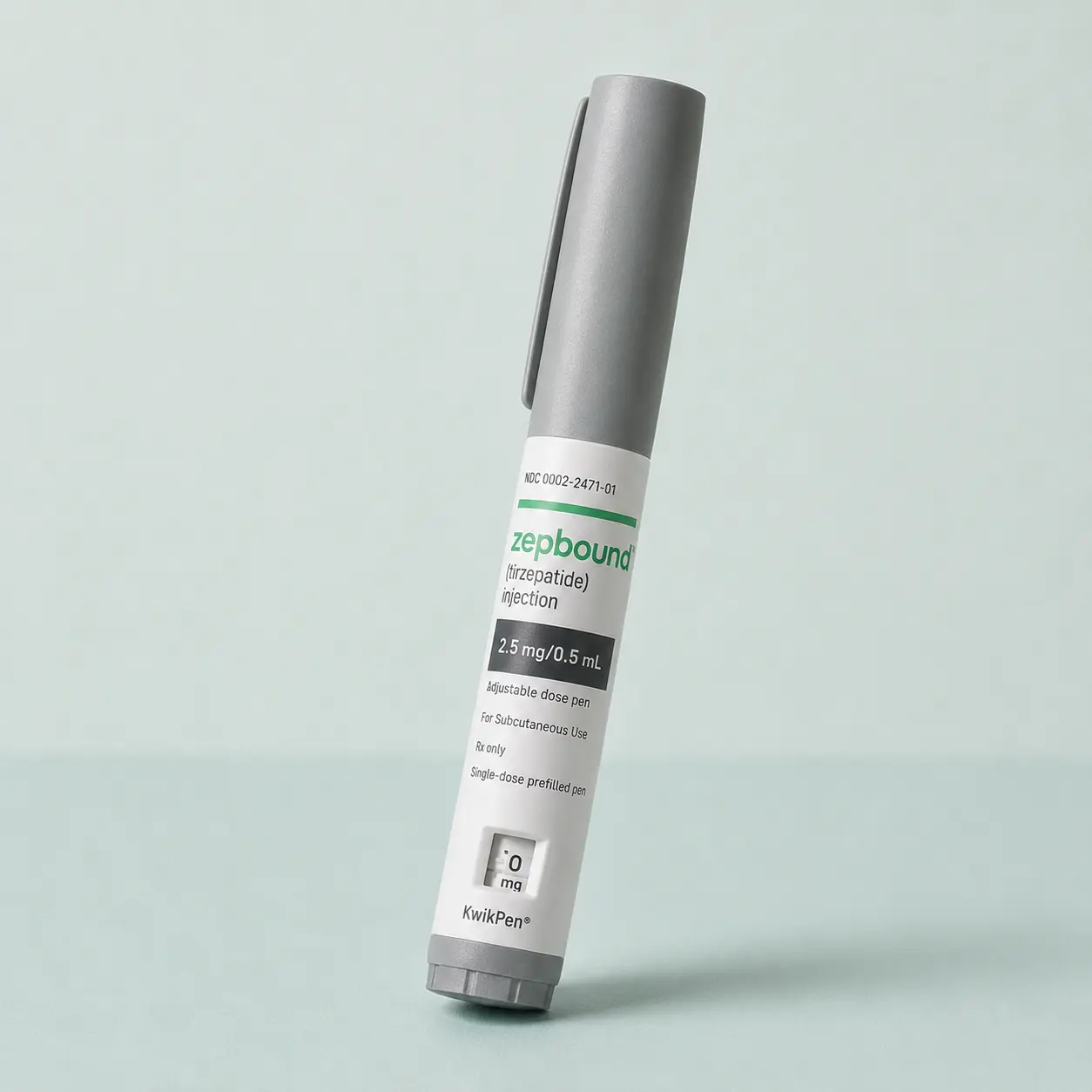
Coverage is why the cash price matters so much here. By law, regular Medicare Part D can’t cover drugs prescribed for weight loss. A temporary Medicare program, set to run through 2027, covers the Zepbound KwikPen and Wegovy for some people. Private plans vary widely, and many leave out weight-loss GLP-1s completely. Zappy is cash-pay, needs no insurance, and you can use FSA or HSA funds. A clinician reviews every case within 24 hours.
The number the field is still waiting on
Whether tirzepatide takes weight off is settled. SURMOUNT-1 answered that at 20.9%. The open question is whether that weight loss buys the same protection brand-name semaglutide (Wegovy) showed in SELECT: fewer heart attacks, fewer strokes, and fewer cardiovascular deaths. Tirzepatide’s heart outcomes trial in people without diabetes hasn’t reported yet, and it isn’t expected to finish before late 2027. Until it does, the biggest number in weight loss and the biggest number in heart protection belong to two different drugs. Closing that gap is the result worth watching for.